

Kanakadhara Stotram with Meaning
श्रीकनकधारास्तोत्रम्
Angam Hareh Pulaka Bhushanam Ashrayanti: Adi Shankaracharya's Kanakadhara Stotram, the hymn that brought a shower of golden amlas, every verse with transliteration and meaning.
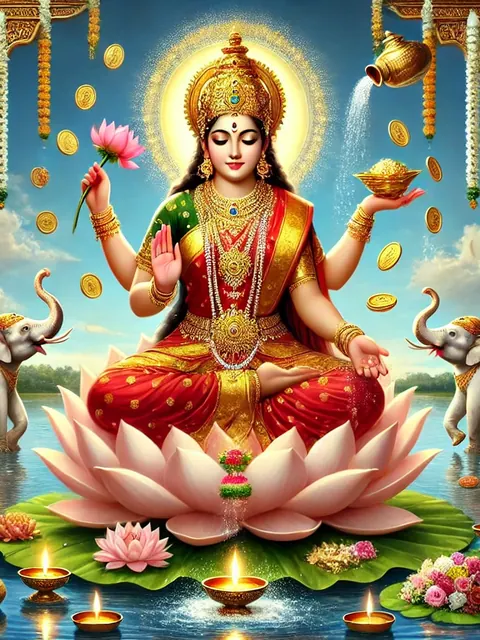
Kanakadhara Stotram with Meaning · श्रीकनकधारास्तोत्रम्
By Adi ShankaracharyaLanguage Sanskrit20 verses
वन्दे वन्दारुमन्दारमिन्दिरानन्दकन्दलम्। अमन्दानन्दसन्दोहबन्धुरं सिन्धुराननम्॥
Vande vandaru-mandaram-indirananda-kandalam, Amandananda-sandoha-bandhuram sindhurananam.
I bow to the elephant-faced Lord, a wish-fulfilling tree to all who bow to him, a fresh shoot of Lakshmi's joy, lovely with an abundance of boundless bliss.
अङ्गं हरेः पुलकभूषणमाश्रयन्ती भृङ्गाङ्गनेव मुकुलाभरणं तमालम्। अङ्गीकृताखिलविभूतिरपाङ्गलीला माङ्गल्यदास्तु मम मङ्गलदेवतायाः॥
Angam hareh pulaka-bhushanam-ashrayanti Bhringanganeva mukulabharanam tamalam, Angikritakhila-vibhutir-apanga-lila Mangalyadastu mama mangala-devatayah.
As a female bee clings to the tamala tree adorned with buds, the playful sidelong glance of Lakshmi, goddess of all good fortune, rests on Hari's body, which thrills with joy at its touch. That glance holds all the wealth of the world: may it bring me blessings.
मुग्धा मुहुर्विदधती वदने मुरारेः प्रेमत्रपाप्रणिहितानि गतागतानि। माला दृशोर्मधुकरीव महोत्पले या सा मे श्रियं दिशतु सागरसम्भवायाः॥
Mugdha muhur-vidadhati vadane Murareh Prema-trapa-pranihitani gatagatani, Mala drishor-madhukariva mahotpale ya Sa me shriyam dishatu sagara-sambhavayah.
Like a bee hovering about a great blue lotus, the charming row of glances of the ocean-born goddess goes again and again to Murari's face and turns away, drawn by love and held back by shyness. May that gaze grant me prosperity.
विश्वामरेन्द्रपदविभ्रमदानदक्षम् आनन्दहेतुरधिकं मुरविद्विषोऽपि। ईषन्निषीदतु मयि क्षणमीक्षणार्धम् इन्दीवरोदरसहोदरमिन्दिरायाः॥
Vishvamarendra-pada-vibhrama-dana-daksham Ananda-hetur-adhikam Mura-vidvisho-'pi, Ishan-nishidatu mayi kshanam-ikshanardham Indivarodara-sahodaram-Indirayah.
Indira's half-glance can bestow the splendour of Indra's throne over all the gods; it gives great delight even to Vishnu, foe of Mura; it is like the heart of a blue water lily. May it rest on me, even a little, even for a moment.
आमीलिताक्षमधिगम्य मुदा मुकुन्दम् आनन्दकन्दमनिमेषमनङ्गतन्त्रम्। आकेकरस्थितकनीनिकपक्ष्मनेत्रं भूत्यै भवेन्मम भुजङ्गशयाङ्गनायाः॥
Amilitaksham-adhigamya muda Mukundam Ananda-kandam-animesham-ananga-tantram, Akekara-sthita-kaninika-pakshma-netram Bhutyai bhaven-mama bhujanga-shayanganayah.
The eye of the consort of the Lord who reclines on the serpent turns joyfully to Mukunda, the root of bliss, whose own eyes are half-closed and who is under love's spell; it gazes without blinking, pupil and lashes half-turned in a sidelong look. May that eye bring me prosperity.
बाह्वन्तरे मधुजितः श्रितकौस्तुभे या हारावलीव हरिनीलमयी विभाति। कामप्रदा भगवतोऽपि कटाक्षमाला कल्याणमावहतु मे कमलालयायाः॥
Bahvantare Madhujitah shrita-kaustubhe ya Haravaliva harinilamayi vibhati, Kamaprada bhagavato-'pi kataksha-mala Kalyanam-avahatu me kamalalayayah.
The garland of glances of the goddess who dwells in the lotus shines on the Kaustubha-adorned chest of Vishnu, conqueror of Madhu, like a string of sapphires, and fulfils the wishes even of the Lord. May it bring me well-being.
कालाम्बुदालिललितोरसि कैटभारेः धाराधरे स्फुरति या तडिदङ्गनेव। मातुः समस्तजगतां महनीयमूर्तिः भद्राणि मे दिशतु भार्गवनन्दनायाः॥
Kalambudali-lalitorasi Kaitabhareh Dharadhare sphurati ya tadid-anganeva, Matuh samasta-jagatam mahaniya-murtir Bhadrani me dishatu Bhargava-nandanayah.
Like lightning flashing across a rain cloud, the glorious form of the daughter of Bhrigu, mother of all the worlds, gleams on the chest of Vishnu, foe of Kaitabha, which is lovely as a bank of dark clouds. May she grant me every blessing.
प्राप्तं पदं प्रथमतः खलु यत्प्रभावात् माङ्गल्यभाजि मधुमाथिनि मन्मथेन। मय्यापतेत्तदिह मन्थरमीक्षणार्धं मन्दालसं च मकरालयकन्यकायाः॥
Praptam padam prathamatah khalu yat-prabhavan Mangalya-bhaji Madhumathini Manmathena, Mayyapatet-tad-iha mantharam-ikshanardham Mandalasam cha makaralaya-kanyakayah.
By its power Kama first found a place in the heart of Vishnu, slayer of Madhu and home of all that is auspicious. May that slow, languid half-glance of the ocean's daughter fall on me here.
दद्याद्दयानुपवनो द्रविणाम्बुधाराम् अस्मिन्नकिञ्चनविहङ्गशिशौ विषण्णे। दुष्कर्मघर्ममपनीय चिराय दूरं नारायणप्रणयिनीनयनाम्बुवाहः॥
Dadyad-dayanupavano dravinambu-dharam Asminn-akinchana-vihanga-shishau vishanne, Dushkarma-gharmam-apaniya chiraya duram Narayana-pranayini-nayanambuvahah.
May the rain cloud of the eyes of Narayana's beloved, driven by the breeze of compassion, drive the scorching heat of my misdeeds far away for ever and pour a stream of wealth on me, a forlorn and penniless fledgling waiting for rain.
इष्टा विशिष्टमतयोऽपि यया दयार्द्र- दृष्ट्या त्रिविष्टपपदं सुलभं लभन्ते। दृष्टिः प्रहृष्टकमलोदरदीप्तिरिष्टां पुष्टिं कृषीष्ट मम पुष्करविष्टरायाः॥
Ishta vishishta-matayo-'pi yaya dayardra- Drishtya trivishtapa-padam sulabham labhante, Drishtih prahrishta-kamalodara-diptir-ishtam Pushtim krishishta mama pushkara-vishtarayah.
Through her glance, moist with compassion, the noble and the wise easily attain the heavenly realm. May the glance of the lotus-seated goddess, radiant as the heart of a blooming lotus, grant me the prosperity I long for.
गीर्देवतेति गरुडध्वजसुन्दरीति शाकम्भरीति शशिशेखरवल्लभेति। सृष्टिस्थितिप्रलयकेलिषु संस्थितायै तस्यै नमस्त्रिभुवनैकगुरोस्तरुण्यै॥
Gir-devateti Garudadhvaja-sundariti Shakambhariti Shashishekhara-vallabheti, Srishti-sthiti-pralaya-kelishu samsthitayai Tasyai namas-tribhuvanaika-guros-tarunyai.
Salutations to her, the young consort of the one teacher of the three worlds, who takes part in the play of creation, preservation and dissolution as the goddess of speech, as the beloved of Vishnu whose banner bears Garuda, as Shakambhari, and as the beloved of the moon-crowned Shiva.
श्रुत्यै नमोऽस्तु शुभकर्मफलप्रसूत्यै रत्यै नमोऽस्तु रमणीयगुणार्णवायै। शक्त्यै नमोऽस्तु शतपत्रनिकेतनायै पुष्ट्यै नमोऽस्तु पुरुषोत्तमवल्लभायै॥
Shrutyai namo-'stu shubha-karma-phala-prasutyai Ratyai namo-'stu ramaniya-gunarnavayai, Shaktyai namo-'stu shatapatra-niketanayai Pushtyai namo-'stu Purushottama-vallabhayai.
Salutations to her who is the Veda and brings forth the fruit of good deeds; to her who is delight, an ocean of lovely virtues; to her who is power, dwelling in the hundred-petalled lotus; to her who is nourishment, beloved of the Supreme Person.
नमोऽस्तु नालीकनिभाननायै नमोऽस्तु दुग्धोदधिजन्मभूम्यै। नमोऽस्तु सोमामृतसोदरायै नमोऽस्तु नारायणवल्लभायै॥
Namo-'stu nalika-nibhananayai Namo-'stu dugdhodadhi-janma-bhumyai, Namo-'stu somamrita-sodarayai Namo-'stu Narayana-vallabhayai.
Salutations to her whose face is like a lotus; to her whose birthplace is the ocean of milk; to the sister of the moon and of the nectar; salutations to the beloved of Narayana.
सम्पत्कराणि सकलेन्द्रियनन्दनानि साम्राज्यदानविभवानि सरोरुहाक्षि। त्वद्वन्दनानि दुरिताहरणोद्यतानि मामेव मातरनिशं कलयन्तु मान्ये॥
Sampatkarani sakalendriya-nandanani Samrajya-dana-vibhavani saroruhakshi, Tvad-vandanani duritaharanodyatani Mam-eva matar-anisham kalayantu manye.
Lotus-eyed Mother, worthy of all honour: salutations to you bring wealth, delight every sense, have the power to grant even an empire and stand ready to take away sin. May they always be mine.
यत्कटाक्षसमुपासनाविधिः सेवकस्य सकलार्थसम्पदः। सन्तनोति वचनाङ्गमानसैः त्वां मुरारिहृदयेश्वरीं भजे॥
Yat-kataksha-samupasana-vidhih Sevakasya sakalartha-sampadah, Santanoti vachananga-manasaih, Tvam Murari-hridayeshvarim bhaje.
Queen of Murari's heart, I worship you with speech, body and mind; simply to wait upon your glance brings every kind of wealth to your servant.
सरसिजनिलये सरोजहस्ते धवलतमांशुकगन्धमाल्यशोभे। भगवति हरिवल्लभे मनोज्ञे त्रिभुवनभूतिकरि प्रसीद मह्यम्॥
Sarasija-nilaye saroja-haste Dhavalatamamshuka-gandha-malya-shobhe, Bhagavati Hari-vallabhe manojne Tribhuvana-bhutikari prasida mahyam.
You who dwell in the lotus and hold a lotus in your hand, shining in the whitest garments, with sandal paste and garlands; Goddess, beloved of Hari, enchanting, giver of prosperity to the three worlds: be gracious to me.
दिग्घस्तिभिः कनककुम्भमुखावसृष्ट- स्वर्वाहिनीविमलचारुजलप्लुताङ्गीम्। प्रातर्नमामि जगतां जननीमशेष- लोकाधिनाथगृहिणीममृताब्धिपुत्रीम्॥
Dig-ghastibhih kanaka-kumbha-mukhavasrishta- Svarvahini-vimala-charu-jala-plutangim, Pratar-namami jagatam jananim-ashesha- Lokadhinatha-grihinim-amritabdhi-putrim.
Each morning I bow to the mother of the worlds, wife of the lord of all the worlds, daughter of the ocean of nectar, whose body is bathed in the pure, lovely waters of the heavenly Ganga poured from golden pitchers by the elephants of the directions.
कमले कमलाक्षवल्लभे त्वं करुणापूरतरङ्गितैरपाङ्गैः। अवलोकय मामकिञ्चनानां प्रथमं पात्रमकृत्रिमं दयायाः॥
Kamale kamalaksha-vallabhe tvam Karuna-pura-tarangitair-apangaih, Avalokaya mam-akinchananam Prathamam patram-akritrimam dayayah.
Kamala, beloved of the lotus-eyed Lord, look on me with sidelong glances that ripple with a flood of compassion. Among the destitute I come first, a true and worthy object of your mercy.
स्तुवन्ति ये स्तुतिभिरमीभिरन्वहं त्रयीमयीं त्रिभुवनमातरं रमाम्। गुणाधिका गुरुतरभाग्यभागिनो भवन्ति ते भुवि बुधभाविताशयाः॥
Stuvanti ye stutibhir-amibhir-anvaham Trayimayim tribhuvana-mataram Ramam, Gunadhika gurutara-bhagya-bhagino Bhavanti te bhuvi budha-bhavitashayah.
Those who praise Rama, embodiment of the three Vedas and mother of the three worlds, with these hymns every day become rich in virtue and blessed with great good fortune on earth, and the wise honour their hearts.
सुवर्णधारास्तोत्रं यच्छङ्कराचार्यनिर्मितम्। त्रिसन्ध्यं यः पठेन्नित्यं स कुबेरसमो भवेत्॥
Suvarna-dhara-stotram yach-chhankaracharya-nirmitam, Trisandhyam yah pathen-nityam sa Kubera-samo bhavet.
Whoever recites this hymn of the golden stream, composed by Shankaracharya, every day at dawn, noon and dusk becomes like Kubera.
Kanakadhara Stotram with Meaning: audio & video
© T-Series Bhakti Sagar, embedded from YouTube under its standard licence.
How to chant the Kanakadhara Stotram with Meaning
Once daily; at dawn, noon and dusk for a vow, as the closing verse suggests.
Fridays, Akshaya Tritiya, Dhanteras and Diwali.
- Light a ghee diya before Lakshmi and offer a lotus or a red flower.
- Recite the Ganesha invocation, then the eighteen verses and the closing verse.
- Give what you can to someone in need, remembering the poor woman of the story.
About the Kanakadhara Stotram with Meaning
As a young brahmachari, Shankara went begging for alms at the home of a poor brahmin woman who had nothing to give but a single dried amla, which she offered him with great love. Moved by her poverty, he sang these verses to Lakshmi, and tradition says a shower of golden amla fruits fell on the house; hence the name Kanakadhara, the stream of gold. Most verses dwell on Lakshmi's sidelong glance resting on Vishnu and pray that it may fall on the devotee too. It is recited on Fridays, Akshaya Tritiya, Dhanteras, Diwali and Varalakshmi Vrat. Some editions add further verses of salutation after verse 18; the text here is the core hymn with its traditional closing verse.
Questions
Why is it called the Kanakadhara Stotram?
Kanaka means gold and dhara a stream. When young Shankara sang it at a poor woman's door, tradition says Lakshmi showered golden amla fruits on her house.
When should the Kanakadhara Stotram be recited?
On Fridays, Akshaya Tritiya, Dhanteras, Diwali and Varalakshmi Vrat, or every day. Its closing verse speaks of reciting it at dawn, noon and dusk.
Have a question about this stotra?
More for Lakshmi
- महालक्ष्म्यष्टकम् — नमस्तेऽस्तु महामायेMahalakshmi Ashtakam (Namastestu Mahamaye) with Meaning▶ VideoSanskrit
- ॐ जय लक्ष्मी माताOm Jai Lakshmi Mata Aarti (Shri Lakshmi Aarti)▶ Video
- श्री लक्ष्मी चालीसाLakshmi Chalisa with Meaning▶ VideoAwadhi
- लक्ष्मी मंत्र — ॐ श्रीं महालक्ष्म्यै नमःLakshmi Mantra: Om Shreem Mahalakshmyai Namah▶ Video📿 Jap counterSanskrit
Browse all stotras & stutis in the Aarti & Chalisa library, or the whole Aarti, Bhajan & Mantra collection.