
Karpur Gauram Karunavtaram (Shiva Shloka after Aarti)
कर्पूरगौरं करुणावतारं
Karpur Gauram Karunavataram Samsara Saram Bhujagendra Haram: the Shiva shloka sung at the end of every aarti, with word-by-word meaning.
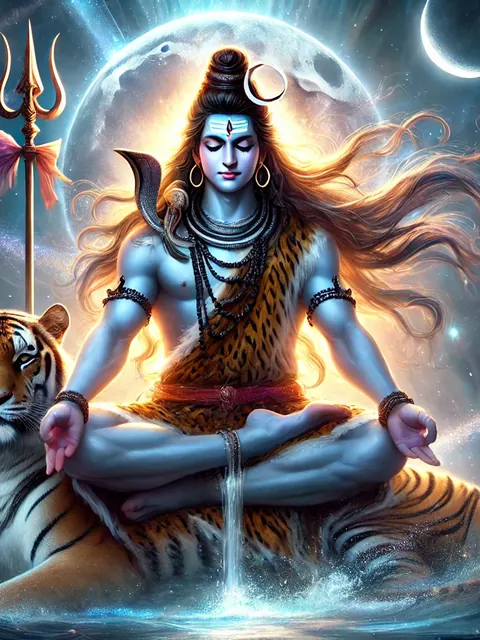
Karpur Gauram Karunavtaram (Shiva Shloka after Aarti) · कर्पूरगौरं करुणावतारं
Language Sanskrit1 verse
कर्पूरगौरं करुणावतारं संसारसारं भुजगेन्द्रहारम्। सदावसन्तं हृदयारविन्दे भवं भवानीसहितं नमामि॥
Karpura-gauram karunavataram samsara-saram bhujagendra-haram, Sada vasantam hridayaravinde Bhavam Bhavani-sahitam namami.
I bow to Shiva, white as camphor, compassion incarnate, the essence of the world, who wears the king of serpents as his garland, who always dwells in the lotus of the heart, together with Bhavani.
What each word means
| Word | Sounds like | Meaning |
|---|---|---|
| कर्पूरगौरं | karpura-gauram | white as camphor |
| करुणावतारं | karunavataram | compassion incarnate |
| संसारसारं | samsara-saram | the essence of the world |
| भुजगेन्द्रहारम् | bhujagendra-haram | wearing the king of serpents as a garland |
| सदा वसन्तं | sada vasantam | ever dwelling |
| हृदयारविन्दे | hridayaravinde | in the lotus of the heart |
| भवं | Bhavam | Bhava, Shiva, the source of all being |
| भवानीसहितं | Bhavani-sahitam | together with Bhavani (Parvati) |
| नमामि | namami | I bow |
Karpur Gauram Karunavtaram (Shiva Shloka after Aarti): audio & video
© T-Series Bhakti Sagar, embedded from YouTube under its standard licence.
How to chant the Karpur Gauram Karunavtaram (Shiva Shloka after Aarti)
Once or three times.
Right after the aarti song, before the flame is offered to everyone.
- Keep waving the aarti flame (or hold it still) while the shloka is sung.
- Then offer the flame to the deity, circle it once around the room if that is your custom, and let everyone take its warmth on their palms and eyes.
About the Karpur Gauram Karunavtaram
In almost every Hindu home and temple, the aarti ends with this shloka while the camphor flame is still burning, whichever deity the aarti was for. It praises Shiva as white as camphor and as compassion itself, living in the lotus of the heart together with Bhavani. Tradition says Vishnu sang it at the wedding of Shiva and Parvati.
Questions
Why is Karpur Gauram sung after every aarti?
The aarti is waved with camphor, and this shloka praises Shiva as camphor-white, the inner Lord who lives in every heart. Ending with it offers the worship to the Lord within.
Where is Karpur Gauram from?
Its exact source is not known. It has been sung for centuries, and tradition says Vishnu sang it at the wedding of Shiva and Parvati.
Have a question about this shloka?
More for Shiva
- ॐ जय शिव ओंकाराOm Jai Shiv Omkara Aarti▶ Video
- महामृत्युंजय मंत्रMahamrityunjaya Mantra▶ Video📿 Jap counterSanskrit
 क्षमा प्रार्थना — आवाहनं न जानामिKshama Prarthana: Aavahanam Na Janami (Prayer for Forgiveness after Puja)Sanskrit
- लवथवती विक्राळाLavthavati Vikrala (Marathi Shiv Aarti)Marathi
- श्री शिव चालीसाShiv Chalisa with Meaning▶ VideoAwadhi
- शिव ताण्डव स्तोत्रम्Shiv Tandav Stotram with Meaning▶ VideoSanskrit
Browse all mantras in the Mantra library, or the whole Aarti, Bhajan & Mantra collection.