

Shiv Tandav Stotram with Meaning
शिव ताण्डव स्तोत्रम्
Jatatavi Galajjala Pravaha Pavitasthale: Ravana's Shiv Tandav Stotram, the thunderous hymn to Shiva's cosmic dance, all verses with transliteration and meaning.
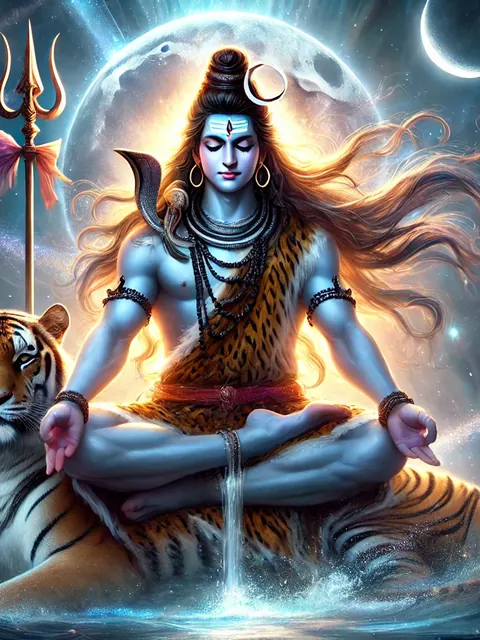
Shiv Tandav Stotram with Meaning · शिव ताण्डव स्तोत्रम्
By RavanaLanguage Sanskrit17 verses
जटाटवीगलज्जलप्रवाहपावितस्थले गलेऽवलम्ब्य लम्बितां भुजङ्गतुङ्गमालिकाम्। डमड्डमड्डमड्डमन्निनादवड्डमर्वयं चकार चण्डताण्डवं तनोतु नः शिवः शिवम्॥
Jatatavi-galaj-jala-pravaha-pavita-sthale Gale-avalambya lambitam bhujanga-tunga-malikam, Damad-damad-damad-daman-ninadavad-damarvayam Chakara chanda-tandavam tanotu nah Shivah shivam.
With the ground purified by the water streaming from the forest of his matted hair, a great serpent hanging like a garland at his neck, his damru sounding damad, damad, damad, Shiva performed the fierce Tandava. May that Shiva bring us blessings.
जटाकटाहसम्भ्रमभ्रमन्निलिम्पनिर्झरी विलोलवीचिवल्लरीविराजमानमूर्धनि। धगद्धगद्धगज्ज्वलल्ललाटपट्टपावके किशोरचन्द्रशेखरे रतिः प्रतिक्षणं मम॥
Jata-kataha-sambhrama-bhraman-nilimpa-nirjhari- Vilola-veechi-vallari-virajamana-moordhani, Dhagad-dhagad-dhagaj-jvalal-lalata-patta-pavake Kishora-chandra-shekhare ratih pratikshanam mama.
His head shines with the restless waves of the heavenly Ganga whirling in the cauldron of his matted locks; on his forehead fire blazes dhagad, dhagad; the young crescent moon is his crest. Every moment my love is for him.
धराधरेन्द्रनन्दिनीविलासबन्धुबन्धुर स्फुरद्दिगन्तसन्ततिप्रमोदमानमानसे। कृपाकटाक्षधोरणीनिरुद्धदुर्धरापदि क्वचिद्दिगम्बरे मनो विनोदमेतु वस्तुनि॥
Dharadharendra-nandini-vilasa-bandhu-bandhura- Sphurad-diganta-santati-pramodamana-manase, Kripa-kataksha-dhorani-niruddha-durdharapadi Kvachid-digambare mano vinodametu vastuni.
His mind delights in the playful grace of Parvati, daughter of the mountain king, and in all the beings to the ends of the directions; the stream of his compassionate glances stops even unbearable calamities. May my mind find joy in that sky-clad Lord.
जटाभुजङ्गपिङ्गलस्फुरत्फणामणिप्रभा कदम्बकुङ्कुमद्रवप्रलिप्तदिग्वधूमुखे। मदान्धसिन्धुरस्फुरत्त्वगुत्तरीयमेदुरे मनो विनोदमद्भुतं बिभर्तु भूतभर्तरि॥
Jata-bhujanga-pingala-sphurat-phana-mani-prabha- Kadamba-kunkuma-drava-pralipta-digvadhu-mukhe, Madandha-sindhura-sphurat-tvag-uttariya-medure Mano vinodam-adbhutam bibhartu bhoota-bhartari.
The reddish light of the jewels on the hoods of the serpents in his locks paints the faces of the maidens of the directions as if with kumkum; he wears the glistening hide of a maddened elephant as his upper cloth. May my mind find wondrous joy in the Lord of all beings.
सहस्रलोचनप्रभृत्यशेषलेखशेखर प्रसूनधूलिधोरणी विधूसराङ्घ्रिपीठभूः। भुजङ्गराजमालया निबद्धजाटजूटकः श्रियै चिराय जायतां चकोरबन्धुशेखरः॥
Sahasra-lochana-prabhrity-ashesha-lekha-shekhara- Prasoona-dhooli-dhorani vidhoosaranghri-peetha-bhooh, Bhujanga-raja-malaya nibaddha-jata-jootakah Shriyai chiraya jayatam chakora-bandhu-shekharah.
His footstool is grey with the pollen falling from the flowers on the heads of Indra and all the gods who bow to him; his matted hair is tied with the king of serpents; the moon is his crest. May he bring us lasting prosperity.
ललाटचत्वरज्वलद्धनञ्जयस्फुलिङ्गभा निपीतपञ्चसायकं नमन्निलिम्पनायकम्। सुधामयूखलेखया विराजमानशेखरं महाकपालिसम्पदे शिरोजटालमस्तु नः॥
Lalata-chatvara-jvalad-dhananjaya-sphulinga-bha- Nipeeta-pancha-sayakam naman-nilimpa-nayakam, Sudha-mayookha-lekhaya virajamana-shekharam Maha-kapali-sampade shiro-jatalam-astu nah.
He who consumed Kamadeva, the god of five arrows, with the sparks of the fire blazing on the broad field of his forehead; before whom the lords of the gods bow; whose crest shines with the crescent of the nectar-rayed moon: may that great skull-bearer with matted locks be our wealth.
करालभालपट्टिकाधगद्धगद्धगज्ज्वल द्धनञ्जयाहुतीकृतप्रचण्डपञ्चसायके। धराधरेन्द्रनन्दिनीकुचाग्रचित्रपत्रक प्रकल्पनैकशिल्पिनि त्रिलोचने रतिर्मम॥
Karala-bhala-pattika-dhagad-dhagad-dhagaj-jvalad- Dhananjayahuti-krita-prachanda-pancha-sayake, Dharadharendra-nandini-kuchagra-chitra-patraka- Prakalpanaika-shilpini trilochane ratir-mama.
My love is for the three-eyed one, who offered the mighty Kamadeva as an oblation into the fire blazing dhagad, dhagad on his fearsome forehead, and who is the one artist skilled in painting decorations on Parvati, the mountain's daughter.
नवीनमेघमण्डली निरुद्धदुर्धरस्फुरत् कुहूनिशीथिनीतमः प्रबन्धबद्धकन्धरः। निलिम्पनिर्झरीधरस्तनोतु कृत्तिसिन्धुरः कलानिधानबन्धुरः श्रियं जगद्धुरन्धरः॥
Naveena-megha-mandali niruddha-durdhara-sphurat- Kuhu-nisheethini-tamah prabandha-baddha-kandharah, Nilimpa-nirjhari-dharas-tanotu kritti-sindhurah Kala-nidhana-bandhurah shriyam jagad-dhurandharah.
His neck is dark as a new-moon midnight covered by banks of fresh rain clouds; he bears the heavenly Ganga and wears the elephant hide; he is lovely with the moon and carries the burden of the universe. May he increase our prosperity.
प्रफुल्लनीलपङ्कजप्रपञ्चकालिमप्रभा वलम्बिकण्ठकन्दलीरुचिप्रबद्धकन्धरम्। स्मरच्छिदं पुरच्छिदं भवच्छिदं मखच्छिदं गजच्छिदान्धकच्छिदं तमन्तकच्छिदं भजे॥
Praphulla-neela-pankaja-prapancha-kalima-prabha- Valambi-kantha-kandali-ruchi-prabaddha-kandharam, Smarach-chhidam purach-chhidam bhavach-chhidam makhach-chhidam Gajach-chhidandhakach-chhidam tam-antakach-chhidam bhaje.
I worship him whose throat glows dark like a world of blooming blue lotuses: who destroyed Kamadeva, destroyed Tripura, destroys worldly bondage, destroyed Daksha's sacrifice, destroyed the elephant demon and Andhaka, and destroyed Death itself.
अखर्वसर्वमङ्गलाकलाकदम्बमञ्जरी रसप्रवाहमाधुरीविजृम्भणामधुव्रतम्। स्मरान्तकं पुरान्तकं भवान्तकं मखान्तकं गजान्तकान्धकान्तकं तमन्तकान्तकं भजे॥
Akharva-sarva-mangala-kala-kadamba-manjari- Rasa-pravaha-madhuri-vijrimbhana-madhuvratam, Smarantakam purantakam bhavantakam makhantakam Gajantakandhakantakam tam-antakantakam bhaje.
He is the bee enjoying the honey flowing from the blossoms of the arts of the all-auspicious Parvati. I worship him: the end of Kama, the end of Tripura, the end of worldly existence, the end of the sacrifice, the end of the elephant demon and of Andhaka, the end of Death.
जयत्वदभ्रविभ्रमभ्रमद्भुजङ्गमश्वस द्विनिर्गमत्क्रमस्फुरत्करालभालहव्यवाट्। धिमिद्धिमिद्धिमिध्वनन्मृदङ्गतुङ्गमङ्गल ध्वनिक्रमप्रवर्तितप्रचण्डताण्डवः शिवः॥
Jayatvad-abhra-vibhrama-bhramad-bhujangamashvasad- Vinirgamat-krama-sphurat-karala-bhala-havyavat, Dhimid-dhimid-dhimi-dhvanan-mridanga-tunga-mangala- Dhvani-krama-pravartita-prachanda-tandavah Shivah.
Victory to Shiva, the fire on whose fearsome forehead flares with the hissing breath of the serpents whirling wildly around him, and who dances the fierce Tandava to the rising, auspicious beat of the mridang sounding dhimid, dhimid, dhimi.
दृषद्विचित्रतल्पयोर्भुजङ्गमौक्तिकस्रजो र्गरिष्ठरत्नलोष्ठयोः सुहृद्विपक्षपक्षयोः। तृणारविन्दचक्षुषोः प्रजामहीमहेन्द्रयोः समं प्रवर्तयन्मनः कदा सदाशिवं भजे॥
Drishad-vichitra-talpayor-bhujanga-mauktika-srajor- Garishtha-ratna-loshthayoh suhrid-vipaksha-pakshayoh, Trinaravinda-chakshushoh praja-mahi-mahendrayoh Samam pravartayan-manah kada Sadashivam bhaje.
When will I worship Sadashiva with a mind that sees alike a stone and a fine bed, a serpent and a pearl necklace, a precious jewel and a lump of clay, friend and foe, a blade of grass and a lotus-eyed beauty, a common subject and a great king?
कदा निलिम्पनिर्झरीनिकुञ्जकोटरे वसन् विमुक्तदुर्मतिः सदा शिरःस्थमञ्जलिं वहन्। विलोललोललोचनो ललामभाललग्नकः शिवेति मन्त्रमुच्चरन् कदा सुखी भवाम्यहम्॥
Kada nilimpa-nirjhari-nikunja-kotare vasan Vimukta-durmatih sada shirahstham-anjalim vahan, Vilola-lola-lochano lalama-bhala-lagnakah Shiveti mantram-uchcharan kada sukhi bhavamyaham.
When will I be happy, living in a grove by the heavenly Ganga, free of evil thoughts, always with folded hands raised above my head, my restless eyes fixed on the Lord with the beautiful forehead, chanting the mantra Shiva?
निलिम्पनाथनागरीकदम्बमौलमल्लिका निगुम्फनिर्भरक्षरन्मधूष्णिकामनोहरः। तनोतु नो मनोमुदं विनोदिनीमहर्निशं परश्रियः परं पदं तदङ्गजत्विषां चयः॥
Nilimpa-natha-nagari-kadamba-maula-mallika- Nigumpha-nirbhara-ksharan-madhooshnika-manoharah, Tanotu no mano-mudam vinodinim-aharnisham Para-shriyah param padam tad-angaja-tvisham chayah.
Lovely with the honey dripping from the jasmine garlands in the hair of the celestial women of Indra's city, the radiance of his limbs is the highest abode of supreme glory. May it fill our minds with joy day and night.
प्रचण्डवाडवानलप्रभाशुभप्रचारिणी महाष्टसिद्धिकामिनीजनावहूतजल्पना। विमुक्तवामलोचनाविवाहकालिकध्वनिः शिवेति मन्त्रभूषणा जगज्जयाय जायताम्॥
Prachanda-vadavanala-prabha-shubha-pracharini Mahashta-siddhi-kamini-janavahoota-jalpana, Vimukta-vama-lochana-vivaha-kalika-dhvanih Shiveti mantra-bhooshana jagaj-jayaya jayatam.
The sound of the mantra Shiva, which spreads blessings bright as the great undersea fire, which the eight great siddhis call out as their invocation, and which rang out at the wedding of the lovely-eyed Parvati: may it bring victory to the world.
इमं हि नित्यमेवमुक्तमुत्तमोत्तमं स्तवं पठन्स्मरन्ब्रुवन्नरो विशुद्धिमेति सन्ततम्। हरे गुरौ सुभक्तिमाशु याति नान्यथा गतिं विमोहनं हि देहिनां सुशङ्करस्य चिन्तनम्॥
Imam hi nityam-evam-uktam-uttamottamam stavam Pathan-smaran-bruvan-naro vishuddhim-eti santatam, Hare gurau subhaktim-ashu yati nanyatha gatim Vimohanam hi dehinam sushankarasya chintanam.
Whoever daily reads, remembers or recites this finest of hymns is always purified, and soon attains deep devotion to Hara, the guru; there is no other way. Meditating on Shankara removes the delusion of embodied beings.
पूजावसानसमये दशवक्त्रगीतं यः शम्भुपूजनपरं पठति प्रदोषे। तस्य स्थिरां रथगजेन्द्रतुरङ्गयुक्तां लक्ष्मीं सदैव सुमुखीं प्रददाति शम्भुः॥
Pooja-vasana-samaye Dashavaktra-geetam Yah Shambhu-poojana-param pathati pradoshe, Tasya sthiram ratha-gajendra-turanga-yuktam Lakshmim sadaiva sumukheem pradadati Shambhuh.
Whoever, at the end of Shiva's worship in the Pradosh hour, recites this hymn sung by ten-headed Ravana, to him Shambhu always grants steady, smiling prosperity with chariots, elephants and horses.
Shiv Tandav Stotram with Meaning: audio & video
© T-Series Bhakti Sagar, embedded from YouTube under its standard licence.
About the Shiv Tandav Stotram with Meaning
Tradition says that Ravana, trying to lift Mount Kailash, was pinned beneath it by Shiva's toe, and sang this hymn in agony and devotion until Shiva, pleased, released him and gave him the name Ravana, the one who roared. Its rolling panchachamara metre and cascading compounds sound like the damru and the stamping feet of the Tandava itself. It is chanted on Mondays, at Pradosh and above all on Mahashivaratri; the closing verse promises lasting prosperity to whoever recites it at the end of Shiva puja in the Pradosh hour.
Questions
Who wrote the Shiv Tandav Stotram?
Tradition attributes it to Ravana, the king of Lanka and a great devotee of Shiva, who sang it when Shiva pressed Mount Kailash down on him.
When should the Shiv Tandav Stotram be recited?
On Mondays and at Pradosh (dusk), after Shiva puja, and on Mahashivaratri. Its last verse says reciting it at the end of the Pradosh puja brings lasting prosperity.
What is the metre of the Shiv Tandav Stotram?
Panchachamara: sixteen syllables a line in alternating short and long beats, which gives it the driving rhythm of a drum.
Have a question about this stotra?
More for Shiva
- ॐ नमः शिवायOm Namah Shivaya (Panchakshari Mantra)▶ Video📿 Jap counterSanskrit
- श्री रुद्राष्टकम्Shri Rudrashtakam with Meaning▶ VideoSanskrit
- लिङ्गाष्टकम्Lingashtakam with Meaning▶ VideoSanskrit
- महामृत्युंजय मंत्रMahamrityunjaya Mantra▶ Video📿 Jap counterSanskrit
- ॐ जय शिव ओंकाराOm Jai Shiv Omkara Aarti▶ Video
- लवथवती विक्राळाLavthavati Vikrala (Marathi Shiv Aarti)Marathi
Browse all stotras & stutis in the Aarti & Chalisa library, or the whole Aarti, Bhajan & Mantra collection.