

Mahamrityunjaya Mantra
महामृत्युंजय मंत्र
Om Tryambakam Yajamahe: the great death-conquering mantra of Lord Shiva from the Rigveda, chanted for healing, protection and freedom from fear. Full text, word-by-word meaning, the method of the 108 jap and a counter to chant along.

Mahamrityunjaya Mantra · महामृत्युंजय मंत्र
By Rigveda 7.59.12Language Sanskrit2 verses
ॐ त्र्यम्बकं यजामहे सुगन्धिं पुष्टिवर्धनम्। उर्वारुकमिव बन्धनान्मृत्योर्मुक्षीय माऽमृतात्॥
Om Tryambakam yajamahe sugandhim pushti-vardhanam, Urvarukam-iva bandhanan mrityor mukshiya maamritat.
We worship the three-eyed Lord, who is fragrant and who nourishes and increases all beings. As a ripe cucumber is freed from its bond to the vine, may He free us from death, and not from immortality.
ॐ हौं जूं सः ॐ भूर्भुवः स्वः ॐ त्र्यम्बकं यजामहे सुगन्धिं पुष्टिवर्धनम्। उर्वारुकमिव बन्धनान्मृत्योर्मुक्षीय माऽमृतात्॥ ॐ स्वः भुवः भूः ॐ सः जूं हौं ॐ॥
Om Haum Joom Sah Om Bhur Bhuvah Swah, Om Tryambakam yajamahe sugandhim pushti-vardhanam, Urvarukam-iva bandhanan mrityor mukshiya maamritat, Om Swah Bhuvah Bhooh Om Sah Joom Haum Om.
For a formal anushthan the mantra is enclosed (samputit) by the seed syllables Haum, Joom and Sah and by the three worlds, earth, atmosphere and heaven, first in order and then reversed. This form is usually learnt from a guru or performed by priests; the short form above is complete in itself.
What each word means
| Word | Sounds like | Meaning |
|---|---|---|
| ॐ | Om | the primordial sound, the Supreme |
| त्र्यम्बकं | tryambakam | the three-eyed one, Shiva |
| यजामहे | yajamahe | we worship, we honour |
| सुगन्धिं | sugandhim | the fragrant one, whose presence pervades like fragrance |
| पुष्टिवर्धनम् | pushti-vardhanam | who nourishes and makes all beings flourish |
| उर्वारुकम् | urvarukam | a cucumber or gourd |
| इव | iva | like, just as |
| बन्धनात् | bandhanat | from its bond (to the stem) |
| मृत्योः | mrityoh | from death |
| मुक्षीय | mukshiya | may I be freed |
| मा | maa | not |
| अमृतात् | amritat | from immortality, the deathless |
Count your jap here
Tap the centre for each mantra, press Space, or turn on voice counting and chant aloud. Your count is saved on this device.
Tap the centre, press Space, or chant aloud with voice counting.
More mantras and malas in the full Jap Mala.
Mahamrityunjaya Mantra: audio & video
© T-Series Bhakti Sagar, embedded from YouTube under its standard licence.
How to chant the Mahamrityunjaya Mantra
108 times (one mala) a day. For a sankalp, 11 or 21 malas daily; a full anushthan is 1.25 lakh repetitions.
Early morning in Brahma muhurta or at Pradosh in the evening. Mondays, Shivaratri and the month of Sawan are especially auspicious.
- Bathe, wear clean clothes and sit on a mat (asana) facing east or north.
- Light a diya before Shiva or a Shivling and offer water, a bel leaf or a flower if you can.
- Take a sankalp: say in your mind for whom and for what you are chanting.
- Chant on a rudraksha mala, one bead for each mantra. Do not cross the sumeru (guru bead); turn the mala around to begin the next round.
- Say every syllable clearly and without hurry, aloud, in a whisper or silently.
- End with a prayer for the well-being of all and offer the jap at Shiva's feet.
Benefits in tradition
- Chanted for good health and recovery, and whenever someone in the family is unwell.
- Believed to protect from untimely death, accidents and fear.
- Calms the mind and steadies the breath; many chant it before sleep or in anxious times.
- Called the moksha mantra: it asks for freedom from the cycle of birth and death.
These are the benefits described in scripture and tradition. Mantra and prayer support, but never replace, medical or professional care.
About the Mahamrityunjaya Mantra
The Mahamrityunjaya (great conqueror of death) mantra is a verse of the Rigveda (7.59.12) that also appears in the Yajurveda. It is addressed to Tryambaka, the three-eyed Shiva, and asks to be released from death as easily as a ripe cucumber slips from its vine, while never being separated from the deathless. Puranic tradition links it with the boy-sage Markandeya, whom Shiva protected from Yama, and it is also called the moksha mantra. Families chant it when someone is unwell, before a journey or an operation, on Mondays and through the month of Sawan, and priests perform the 1.25 lakh anushthan for those in serious difficulty.
Where it is sung
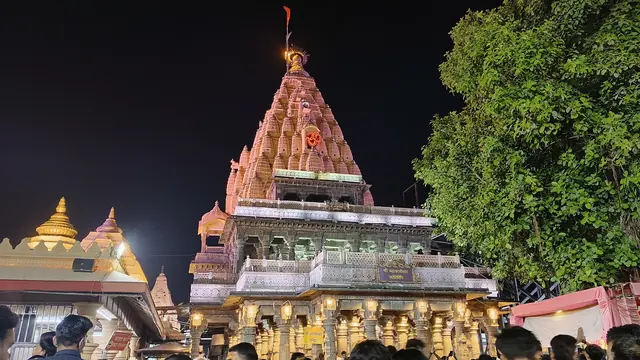 Mahakaleshwar Jyotirlinga
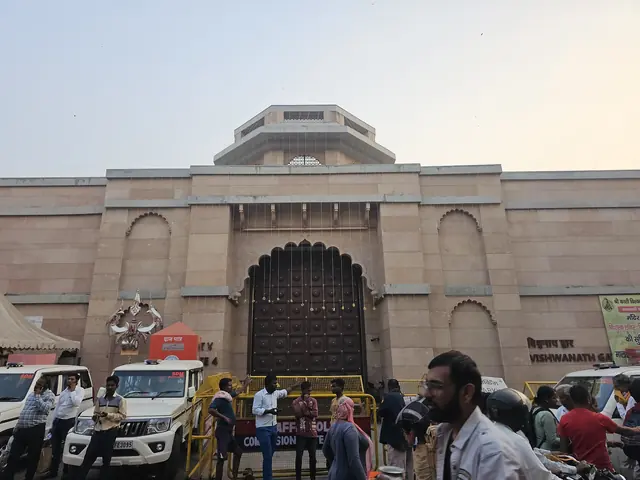 Kashi Vishwanath
Questions
How many times should the Mahamrityunjaya mantra be chanted?
One mala of 108 a day is the usual practice. For a particular wish devotees chant 11, 21 or 51 malas a day for a fixed period, and the full anushthan of 1.25 lakh repetitions is often performed by priests.
Where does the Mahamrityunjaya mantra come from?
It is verse 7.59.12 of the Rigveda and is repeated in the Yajurveda. Puranic tradition connects it with Markandeya, the young devotee whom Shiva saved from Yama.
Who can chant it?
Anyone, man or woman, who chants with faith. A clean body and place, a fixed time and a steady count help the practice.
Can the Mahamrityunjaya jap cure illness?
Devotees chant it for strength and healing alongside treatment. It is a prayer, not a substitute for a doctor's care.
What does urvarukam iva bandhanan mean?
Like a cucumber from its stem. A ripe cucumber falls away from the vine without effort or pain; the prayer asks for the same easy release from the bonds of death.
Have a question about this mantra?
More for Shiva
- ॐ नमः शिवायOm Namah Shivaya (Panchakshari Mantra)▶ Video📿 Jap counterSanskrit
- ॐ जय शिव ओंकाराOm Jai Shiv Omkara Aarti▶ Video
- शिव ताण्डव स्तोत्रम्Shiv Tandav Stotram with Meaning▶ VideoSanskrit
- कर्पूरगौरं करुणावतारंKarpur Gauram Karunavtaram (Shiva Shloka after Aarti)▶ VideoSanskrit
- लवथवती विक्राळाLavthavati Vikrala (Marathi Shiv Aarti)Marathi
- श्री शिव चालीसाShiv Chalisa with Meaning▶ VideoAwadhi
Browse all mantras in the Mantra library, or the whole Aarti, Bhajan & Mantra collection.