

Ram Raksha Stotra with Meaning
श्रीरामरक्षास्तोत्रम्
Charitam Raghunathasya Shatakoti Pravistaram: Budha Kaushika's Ram Raksha Stotra, the armour of Ram's names, all 38 verses with the dhyana, transliteration and meaning.
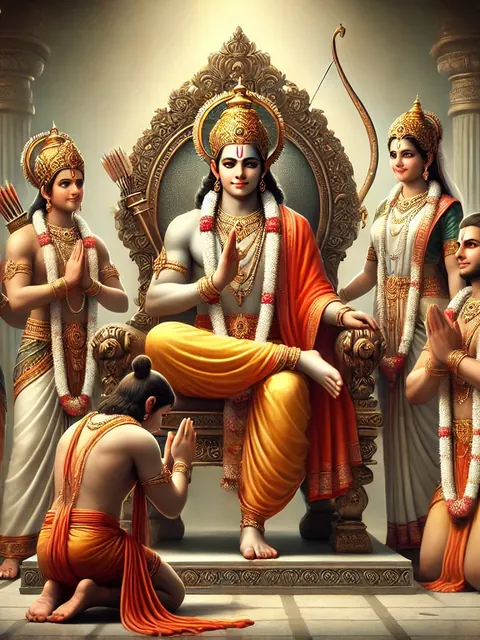
Ram Raksha Stotra with Meaning · श्रीरामरक्षास्तोत्रम्
By Budha KaushikaLanguage Sanskrit21 verses
ॐ श्रीगणेशाय नमः। अस्य श्रीरामरक्षास्तोत्रमन्त्रस्य। बुधकौशिक ऋषिः। श्रीसीतारामचन्द्रो देवता। अनुष्टुप् छन्दः। सीता शक्तिः। श्रीमद्धनुमान् कीलकम्। श्रीरामचन्द्रप्रीत्यर्थे रामरक्षास्तोत्रजपे विनियोगः॥
Om Shri Ganeshaya namah. Asya Shri Rama-raksha-stotra-mantrasya, Budha-Kaushika rishih, Shri Sita-Ramachandro devata, anushtup chhandah, Sita shaktih, Shrimad-Dhanuman kilakam, Shri Ramachandra-prityarthe Rama-raksha-stotra-jape viniyogah.
Salutations to Shri Ganesha. Of this Ram Raksha Stotra mantra the seer is Budha Kaushika, the deity Shri Sita-Ramachandra, the metre anushtup; Sita is its power and Hanuman its key. It is recited to please Shri Ramachandra.
ध्यायेदाजानुबाहुं धृतशरधनुषं बद्धपद्मासनस्थं पीतं वासो वसानं नवकमलदलस्पर्धिनेत्रं प्रसन्नम्। वामाङ्कारूढसीतामुखकमलमिलल्लोचनं नीरदाभं नानालङ्कारदीप्तं दधतमुरुजटामण्डनं रामचन्द्रम्॥
Dhyayed-ajanu-bahum dhrita-shara-dhanusham baddha-padmasana-stham Pitam vaso vasanam nava-kamala-dala-spardhi-netram prasannam, Vamankarudha-Sita-mukha-kamala-milal-lochanam niradabham Nanalankara-diptam dadhatam-uru-jata-mandanam Ramachandram.
Meditate on Ramachandra: his arms reach to his knees, he holds bow and arrows and sits in the lotus posture, dressed in yellow, his eyes rivalling fresh lotus petals, serene. His gaze meets the lotus face of Sita seated on his left lap; he is dark as a rain cloud, shining with ornaments, his great matted locks his crown.
चरितं रघुनाथस्य शतकोटिप्रविस्तरम्। एकैकमक्षरं पुंसां महापातकनाशनम्॥ ध्यात्वा नीलोत्पलश्यामं रामं राजीवलोचनम्। जानकीलक्ष्मणोपेतं जटामुकुटमण्डितम्॥ सासितूणधनुर्बाणपाणिं नक्तञ्चरान्तकम्। स्वलीलया जगत्त्रातुमाविर्भूतमजं विभुम्॥
Charitam Raghunathasya shata-koti-pravistaram, Ekaikam-aksharam pumsam maha-pataka-nashanam. Dhyatva nilotpala-shyamam Ramam rajiva-lochanam, Janaki-Lakshmanopetam jata-mukuta-manditam. Sasi-tuna-dhanur-bana-panim naktanchar-antakam, Svalilaya jagat-tratum-avirbhutam-ajam vibhum.
The story of Raghunath runs to a hundred crore verses, and every single syllable of it destroys even the gravest sin. Meditate on Ram, dark as the blue lotus and lotus-eyed, with Janaki and Lakshman beside him, crowned with matted locks; holding sword, quiver, bow and arrows, the destroyer of the night-roaming demons, the unborn, all-pervading Lord who appeared of his own will to protect the world.
रामरक्षां पठेत्प्राज्ञः पापघ्नीं सर्वकामदाम्। शिरो मे राघवः पातु भालं दशरथात्मजः॥ कौसल्येयो दृशौ पातु विश्वामित्रप्रियः श्रुती। घ्राणं पातु मखत्राता मुखं सौमित्रिवत्सलः॥
Rama-raksham pathet-prajnah papaghnim sarva-kamadam, Shiro me Raghavah patu bhalam Dasharathatmajah. Kausalyeyo drishau patu Vishvamitra-priyah shruti, Ghranam patu makha-trata mukham Saumitri-vatsalah.
Let the wise recite this Ram Raksha, which destroys sin and grants every wish. May Raghava protect my head and the son of Dasharatha my forehead; Kausalya's son my eyes and Vishvamitra's beloved my ears; the guardian of the sacrifice my nose, and he who loves Lakshman my mouth.
जिह्वां विद्यानिधिः पातु कण्ठं भरतवन्दितः। स्कन्धौ दिव्यायुधः पातु भुजौ भग्नेशकार्मुकः॥ करौ सीतापतिः पातु हृदयं जामदग्न्यजित्। मध्यं पातु खरध्वंसी नाभिं जाम्बवदाश्रयः॥
Jihvam vidyanidhih patu kantham Bharata-vanditah, Skandhau divyayudhah patu bhujau bhagnesha-karmukah. Karau Sitapatih patu hridayam Jamadagnya-jit, Madhyam patu Khara-dhvamsi nabhim Jambavad-ashrayah.
May the treasure-house of learning protect my tongue, and he whom Bharat reveres my throat; the bearer of divine weapons my shoulders, and he who broke Shiva's bow my arms; Sita's lord my hands, and the victor over Parashurama my heart; the slayer of Khara my waist, and Jambavan's refuge my navel.
सुग्रीवेशः कटी पातु सक्थिनी हनुमत्प्रभुः। ऊरू रघूत्तमः पातु रक्षःकुलविनाशकृत्॥ जानुनी सेतुकृत्पातु जङ्घे दशमुखान्तकः। पादौ बिभीषणश्रीदः पातु रामोऽखिलं वपुः॥
Sugriveshah kati patu sakthini Hanumat-prabhuh, Uru Raghuttamah patu rakshah-kula-vinashakrit. Januni setukrit-patu janghe Dashamukhantakah, Padau Bibhishana-shridah patu Ramo-'khilam vapuh.
May Sugriva's lord protect my hips and Hanuman's master my loins; the best of the Raghus, destroyer of the demon race, my thighs. May the builder of the bridge protect my knees and the slayer of ten-headed Ravana my shins; he who gave Vibhishana his kingdom my feet; and may Ram protect my whole body.
एतां रामबलोपेतां रक्षां यः सुकृती पठेत्। स चिरायुः सुखी पुत्री विजयी विनयी भवेत्॥ पातालभूतलव्योमचारिणश्छद्मचारिणः। न द्रष्टुमपि शक्तास्ते रक्षितं रामनामभिः॥
Etam Rama-balopetam raksham yah sukriti pathet, Sa chirayuh sukhi putri vijayi vinayi bhavet. Patala-bhutala-vyoma-charinash-chhadma-charinah, Na drashtum-api shaktas-te rakshitam Rama-namabhih.
The virtuous one who recites this protection, filled with Ram's strength, becomes long-lived, happy, blessed with children, victorious and humble. Beings that roam the netherworld, the earth and the sky, and those that move in disguise, cannot even look at one guarded by Ram's names.
रामेति रामभद्रेति रामचन्द्रेति वा स्मरन्। नरो न लिप्यते पापैर्भुक्तिं मुक्तिं च विन्दति॥ जगज्जैत्रैकमन्त्रेण रामनाम्नाभिरक्षितम्। यः कण्ठे धारयेत्तस्य करस्थाः सर्वसिद्धयः॥
Rameti Ramabhadreti Ramachandreti va smaran, Naro na lipyate papair-bhuktim muktim cha vindati. Jagaj-jaitraika-mantrena Rama-namnabhirakshitam, Yah kanthe dharayet-tasya karasthah sarva-siddhayah.
One who remembers him as Ram, Ramabhadra or Ramachandra is not stained by sin and gains both worldly joy and liberation. Whoever keeps by heart this hymn, guarded by the name of Ram, the one mantra that conquers the world, holds every accomplishment in the palm of his hand.
वज्रपञ्जरनामेदं यो रामकवचं स्मरेत्। अव्याहताज्ञः सर्वत्र लभते जयमङ्गलम्॥ आदिष्टवान् यथा स्वप्ने रामरक्षामिमां हरः। तथा लिखितवान् प्रातः प्रबुद्धो बुधकौशिकः॥
Vajra-panjara-namedam yo Rama-kavacham smaret, Avyahatajnah sarvatra labhate jaya-mangalam. Adishtavan yatha svapne Rama-rakshamimam Harah, Tatha likhitavan pratah prabuddho Budha-Kaushikah.
Whoever remembers this armour of Ram, called Vajrapanjara, the diamond cage, finds his word obeyed everywhere and gains victory and good fortune. Just as Shiva taught this Ram Raksha to him in a dream, so Budha Kaushika wrote it down on waking in the morning.
आरामः कल्पवृक्षाणां विरामः सकलापदाम्। अभिरामस्त्रिलोकानां रामः श्रीमान् स नः प्रभुः॥
Aramah kalpa-vrikshanam viramah sakalapadam, Abhiramas-trilokanam Ramah shriman sa nah prabhuh.
He is a garden of wish-fulfilling trees, the end of every calamity, the delight of the three worlds: that glorious Ram is our Lord.
तरुणौ रूपसम्पन्नौ सुकुमारौ महाबलौ। पुण्डरीकविशालाक्षौ चीरकृष्णाजिनाम्बरौ॥ फलमूलाशिनौ दान्तौ तापसौ ब्रह्मचारिणौ। पुत्रौ दशरथस्यैतौ भ्रातरौ रामलक्ष्मणौ॥ शरण्यौ सर्वसत्त्वानां श्रेष्ठौ सर्वधनुष्मताम्। रक्षःकुलनिहन्तारौ त्रायेतां नो रघूत्तमौ॥
Tarunau rupa-sampannau sukumarau mahabalau, Pundarika-vishalakshau chira-krishnajinambarau. Phala-mulashinau dantau tapasau brahmacharinau, Putrau Dasharathasyaitau bhratarau Rama-Lakshmanau. Sharanyau sarva-sattvanam shreshthau sarva-dhanushmatam, Rakshah-kula-nihantarau trayetam no Raghuttamau.
Young and handsome, tender yet mighty, with wide lotus eyes, clad in bark and black deerskin, living on fruits and roots, self-controlled ascetics and celibates: these two brothers, Ram and Lakshman, the sons of Dasharatha, refuge of all beings, best of all archers, destroyers of the demon race. May these two best of the Raghus protect us.
आत्तसज्यधनुषाविषुस्पृशावक्षयाशुगनिषङ्गसङ्गिनौ। रक्षणाय मम रामलक्ष्मणावग्रतः पथि सदैव गच्छताम्॥ सन्नद्धः कवची खड्गी चापबाणधरो युवा। गच्छन्मनोरथोऽस्माकं रामः पातु सलक्ष्मणः॥
Atta-sajya-dhanushav-ishu-sprishav-akshayashuga-nishanga-sanginau, Rakshanaya mama Rama-Lakshmanav-agratah pathi sadaiva gachchhatam. Sannaddhah kavachi khadgi chapa-bana-dharo yuva, Gachchhan-manoratho-'smakam Ramah patu sa-Lakshmanah.
With bows strung and hands on their arrows, carrying quivers of never-ending swift shafts, may Ram and Lakshman always walk ahead of me on the road to protect me. Armed and armoured, with sword, bow and arrows, the youthful Ram goes forth as the fulfilment of our hopes: may he protect us, together with Lakshman.
रामो दाशरथिः शूरो लक्ष्मणानुचरो बली। काकुत्स्थः पुरुषः पूर्णः कौसल्येयो रघूत्तमः॥ वेदान्तवेद्यो यज्ञेशः पुराणपुरुषोत्तमः। जानकीवल्लभः श्रीमानप्रमेयपराक्रमः॥ इत्येतानि जपन्नित्यं मद्भक्तः श्रद्धयान्वितः। अश्वमेधाधिकं पुण्यं सम्प्राप्नोति न संशयः॥
Ramo Dasharathih shuro Lakshmananucharo bali, Kakutsthah purushah purnah Kausalyeyo Raghuttamah. Vedanta-vedyo yajneshah purana-purushottamah, Janaki-vallabhah shriman-aprameya-parakramah. Ityetani japan-nityam mad-bhaktah shraddhayanvitah, Ashvamedhadhikam punyam samprapnoti na samshayah.
Ram, son of Dasharatha, the hero, the mighty one whom Lakshman follows; scion of Kakutstha, the complete Person, Kausalya's son, best of the Raghus; known through the Vedanta, lord of sacrifice, the ancient Supreme Person, beloved of Janaki, glorious, of measureless valour. A devotee of mine (says Shiva) who chants these names daily with faith gains merit greater than the horse sacrifice, without doubt.
रामं दूर्वादलश्यामं पद्माक्षं पीतवाससम्। स्तुवन्ति नामभिर्दिव्यैर्न ते संसारिणो नराः॥
Ramam durva-dala-shyamam padmaksham pita-vasasam, Stuvanti namabhir-divyair-na te samsarino narah.
Those who praise with divine names Ram, dark as a blade of durva grass, lotus-eyed and dressed in yellow, are no longer bound to the cycle of worldly life.
रामं लक्ष्मणपूर्वजं रघुवरं सीतापतिं सुन्दरं काकुत्स्थं करुणार्णवं गुणनिधिं विप्रप्रियं धार्मिकम्। राजेन्द्रं सत्यसन्धं दशरथतनयं श्यामलं शान्तमूर्तिं वन्दे लोकाभिरामं रघुकुलतिलकं राघवं रावणारिम्॥
Ramam Lakshmana-purvajam Raghuvaram Sitapatim sundaram Kakutstham karunarnavam gunanidhim vipra-priyam dharmikam, Rajendram satya-sandham Dasharatha-tanayam shyamalam shanta-murtim Vande lokabhiramam Raghukula-tilakam Raghavam Ravanarim.
I bow to Ram, Lakshman's elder brother, best of the Raghus, Sita's handsome husband; scion of Kakutstha, ocean of compassion, treasury of virtues, dear to the learned, righteous; king of kings, true to his word, son of Dasharatha, dark and peaceful in form; the delight of the world, jewel of the Raghu clan, Raghava, the foe of Ravana.
रामाय रामभद्राय रामचन्द्राय वेधसे। रघुनाथाय नाथाय सीतायाः पतये नमः॥ श्रीराम राम रघुनन्दन राम राम श्रीराम राम भरताग्रज राम राम। श्रीराम राम रणकर्कश राम राम श्रीराम राम शरणं भव राम राम॥
Ramaya Ramabhadraya Ramachandraya vedhase, Raghunathaya nathaya Sitayah pataye namah. Shri Rama Rama Raghunandana Rama Rama, Shri Rama Rama Bharatagraja Rama Rama, Shri Rama Rama rana-karkasha Rama Rama, Shri Rama Rama sharanam bhava Rama Rama.
Salutations to Ram, Ramabhadra, Ramachandra, the creator; to Raghunath, the Lord, the husband of Sita. Shri Ram, Ram, joy of the Raghus; Shri Ram, Ram, Bharat's elder brother; Shri Ram, Ram, fierce in battle: Shri Ram, Ram, be my refuge.
श्रीरामचन्द्रचरणौ मनसा स्मरामि श्रीरामचन्द्रचरणौ वचसा गृणामि। श्रीरामचन्द्रचरणौ शिरसा नमामि श्रीरामचन्द्रचरणौ शरणं प्रपद्ये॥ माता रामो मत्पिता रामचन्द्रः स्वामी रामो मत्सखा रामचन्द्रः। सर्वस्वं मे रामचन्द्रो दयालु- र्नान्यं जाने नैव जाने न जाने॥
Shri Ramachandra-charanau manasa smarami, Shri Ramachandra-charanau vachasa grinami, Shri Ramachandra-charanau shirasa namami, Shri Ramachandra-charanau sharanam prapadye. Mata Ramo mat-pita Ramachandrah, Svami Ramo mat-sakha Ramachandrah, Sarvasvam me Ramachandro dayalur- Nanyam jane naiva jane na jane.
With my mind I remember the feet of Shri Ramachandra; with my speech I praise them; with my head I bow to them; in them I take refuge. Ram is my mother, Ramachandra my father; Ram is my master, Ramachandra my friend; the compassionate Ramachandra is my all. I know no other, none at all, none.
दक्षिणे लक्ष्मणो यस्य वामे तु जनकात्मजा। पुरतो मारुतिर्यस्य तं वन्दे रघुनन्दनम्॥ लोकाभिरामं रणरङ्गधीरं राजीवनेत्रं रघुवंशनाथम्। कारुण्यरूपं करुणाकरं तं श्रीरामचन्द्रं शरणं प्रपद्ये॥ मनोजवं मारुततुल्यवेगं जितेन्द्रियं बुद्धिमतां वरिष्ठम्। वातात्मजं वानरयूथमुख्यं श्रीरामदूतं शरणं प्रपद्ये॥
Dakshine Lakshmano yasya vame tu Janakatmaja, Purato Marutir-yasya tam vande Raghunandanam. Lokabhiramam rana-ranga-dhiram rajiva-netram Raghuvamsha-natham, Karunya-rupam karunakaram tam Shri Ramachandram sharanam prapadye. Manojavam maruta-tulya-vegam jitendriyam buddhimatam varishtham, Vatatmajam vanara-yutha-mukhyam Shri Rama-dutam sharanam prapadye.
I bow to the joy of the Raghus, with Lakshman at his right, Janaka's daughter at his left and Hanuman before him. I take refuge in Shri Ramachandra, the delight of the world, steadfast on the battlefield, lotus-eyed lord of the Raghu dynasty, compassion in form, the source of mercy. I take refuge in Shri Ram's messenger, swift as the mind and fast as the wind, master of the senses, foremost of the wise, son of the Wind, chief of the monkey hosts.
कूजन्तं रामरामेति मधुरं मधुराक्षरम्। आरुह्य कविताशाखां वन्दे वाल्मीकिकोकिलम्॥ आपदामपहर्तारं दातारं सर्वसम्पदाम्। लोकाभिरामं श्रीरामं भूयो भूयो नमाम्यहम्॥ भर्जनं भवबीजानामर्जनं सुखसम्पदाम्। तर्जनं यमदूतानां रामरामेति गर्जनम्॥
Kujantam Rama Rameti madhuram madhuraksharam, Aruhya kavita-shakham vande Valmiki-kokilam. Apadam-apahartaram dataram sarva-sampadam, Lokabhiramam Shri Ramam bhuyo bhuyo namamyaham. Bharjanam bhava-bijanam-arjanam sukha-sampadam, Tarjanam Yama-dutanam Rama Rameti garjanam.
I bow to Valmiki, the cuckoo who, perched on the branch of poetry, sings the sweet syllables Ram, Ram. Again and again I bow to Shri Ram, who takes away calamities, gives every kind of wealth and delights the world. The roar of Ram, Ram roasts the seeds of rebirth, brings happiness and prosperity, and drives away the messengers of Yama.
रामो राजमणिः सदा विजयते रामं रमेशं भजे रामेणाभिहता निशाचरचमू रामाय तस्मै नमः। रामान्नास्ति परायणं परतरं रामस्य दासोऽस्म्यहं रामे चित्तलयः सदा भवतु मे भो राम मामुद्धर॥
Ramo raja-manih sada vijayate Ramam Ramesham bhaje, Ramenabhihata nishachara-chamu Ramaya tasmai namah, Raman-nasti parayanam parataram Ramasya daso-'smyaham, Rame chitta-layah sada bhavatu me bho Rama mam-uddhara.
Ram, the jewel among kings, is ever victorious; I worship Ram, the lord of Lakshmi. By Ram the armies of the night-roamers were struck down; salutations to that Ram. There is no refuge higher than Ram; I am Ram's servant. May my mind always be absorbed in Ram. O Ram, lift me up.
राम रामेति रामेति रमे रामे मनोरमे। सहस्रनाम तत्तुल्यं रामनाम वरानने॥
Rama Rameti Rameti rame Rame manorame, Sahasranama tat-tulyam Rama-nama varanane.
Saying Ram, Ram, Ram, I delight in the delightful Ram. O fair-faced one (Shiva tells Parvati), the name of Ram is equal to the thousand names of Vishnu.
Ram Raksha Stotra with Meaning: audio & video
© T-Series Bhakti Sagar, embedded from YouTube under its standard licence.
How to chant the Ram Raksha Stotra with Meaning
Once daily; eleven times a day for a vow.
Morning after bathing, or at dusk; above all on Ram Navami.
- Sit facing east before an image of Sita-Ram and light a ghee diya.
- Read the viniyoga, then picture Ram as the dhyana verse describes him.
- Recite the 38 verses steadily, without breaking off midway, and offer the recitation to Shri Sita-Ramachandra.
Benefits in tradition
- Protection of every part of the body, which verses 4 to 9 place under Ram's names
- Long life, happiness, children, victory and humility, as verse 10 promises
- Freedom from sin, with both worldly well-being and liberation (verse 12)
These are the benefits described in scripture and tradition. Mantra and prayer support, but never replace, medical or professional care.
About the Ram Raksha Stotra with Meaning
The Ram Raksha Stotra is a kavacha, a hymn of protection. After a meditation on Ram seated with Sita on his lap, it asks a different name of Ram to guard each part of the body, from the head down to the feet, then praises Ram and Lakshman as the two archers who walk ahead of the devotee on every road. Its seer, Budha Kaushika, says Shiva revealed it to him in a dream and he wrote it down when he woke. It is recited daily in many homes, especially in Maharashtra, and on Ram Navami; its closing verses, Shri Rama Rama Raghunandana, Mata Ramo Matpita Ramachandrah and Manojavam Marutatulyavegam, are often sung on their own.
Questions
Who composed the Ram Raksha Stotra?
The sage Budha Kaushika. Its fifteenth verse says Shiva taught it to him in a dream and he wrote it down when he woke in the morning.
Why is it called a kavacha, an armour?
Verses 4 to 9 place a name of Ram on each part of the body, from the head to the feet, so that the whole body is guarded. Verse 14 calls the hymn Vajrapanjara, the diamond cage.
What is special about the verse Ramo Rajamanih Sada Vijayate?
Verse 37 uses the word Ram in all eight cases of Sanskrit grammar, from Ramah and Ramam to Rame and he Rama, which is why it is a favourite with teachers and children.
Have a question about this stotra?
More for Rama
- श्री राम जय राम जय जय रामShri Ram Jai Ram Jai Jai Ram (Ram Mantra)▶ Video📿 Jap counterSanskrit
- श्रीरामचन्द्र कृपालु भजु मनShri Ramchandra Kripalu Bhaju Man (Ram Stuti) with Meaning▶ Video🎧 AudioAwadhi
 श्री हनुमान चालीसाHanuman Chalisa with Meaning▶ Video🎧 AudioAwadhi
- आरती श्री रामायण जी कीAarti Shri Ramayan Ji Ki▶ VideoAwadhi
- श्री राम चालीसाShri Ram Chalisa with Meaning▶ VideoAwadhi
- रघुपति राघव राजारामRaghupati Raghav Raja Ram (Shri Ram Dhun)▶ Video
Browse all stotras & stutis in the Aarti & Chalisa library, or the whole Aarti, Bhajan & Mantra collection.