

Shiv Mahimna Stotram with Meaning
शिवमहिम्नःस्तोत्रम्
Mahimnah Param Te Paramavidusho: Pushpadanta's Shiv Mahimna Stotram, the gandharva's great hymn on the glory of Shiva, all 43 verses with transliteration and meaning.
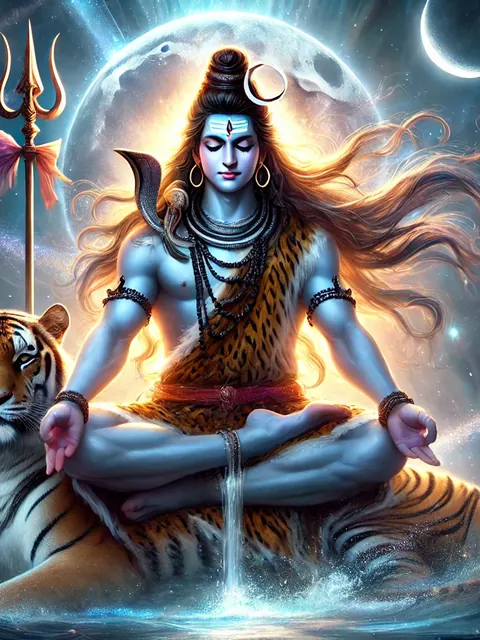
Shiv Mahimna Stotram with Meaning · शिवमहिम्नःस्तोत्रम्
By PushpadantaLanguage Sanskrit36 verses
महिम्नः पारं ते परमविदुषो यद्यसदृशी स्तुतिर्ब्रह्मादीनामपि तदवसन्नास्त्वयि गिरः। अथावाच्यः सर्वः स्वमतिपरिणामावधि गृणन् ममाप्येष स्तोत्रे हर निरपवादः परिकरः॥
Mahimnah param te paramavidusho yadyasadrishi Stutir-brahmadinam-api tadavasannas-tvayi girah, Athavachyah sarvah svamati-parinamavadhi grinan Mamapyesha stotre Hara nirapavadah parikarah.
If the praise of one who does not know the farthest limit of your greatness is unworthy, then even the hymns of Brahma and the gods fall short of you. So no one can be faulted for praising you as far as his understanding reaches, O Hara, and my attempt at this hymn too is beyond reproach.
अतीतः पन्थानं तव च महिमा वाङ्मनसयोः अतद्व्यावृत्त्या यं चकितमभिधत्ते श्रुतिरपि। स कस्य स्तोतव्यः कतिविधगुणः कस्य विषयः पदे त्वर्वाचीने पतति न मनः कस्य न वचः॥
Atitah panthanam tava cha mahima van-manasayoh Atad-vyavrittya yam chakitam-abhidhatte shrutir-api, Sa kasya stotavyah katividha-gunah kasya vishayah Pade tvarvachine patati na manah kasya na vachah.
Your greatness lies beyond the reach of speech and mind; even the Veda speaks of it in awe, only by saying what it is not. Who can praise it, how many qualities has it, whose object can it be? Yet on your manifest form whose mind and whose words do not come to rest?
मधुस्फीता वाचः परमममृतं निर्मितवतः तव ब्रह्मन् किं वागपि सुरगुरोर्विस्मयपदम्। मम त्वेतां वाणीं गुणकथनपुण्येन भवतः पुनामीत्यर्थेऽस्मिन् पुरमथन बुद्धिर्व्यवसिता॥
Madhu-sphita vachah paramam-amritam nirmitavatah Tava Brahman kim vag-api suraguror-vismaya-padam, Mama tvetam vanim guna-kathana-punyena bhavatah Punamityarthe-'smin Puramathana buddhir-vyavasita.
O Brahman, you made the Vedas, words overflowing with honey, the supreme nectar: can even the speech of Brihaspati, guru of the gods, amaze you? It is to purify my own speech through the merit of telling your glories, O destroyer of Tripura, that my mind has set out on this.
तवैश्वर्यं यत्तज्जगदुदयरक्षाप्रलयकृत् त्रयीवस्तु व्यस्तं तिसृषु गुणभिन्नासु तनुषु। अभव्यानामस्मिन् वरद रमणीयामरमणीं विहन्तुं व्याक्रोशीं विदधत इहैके जडधियः॥
Tavaishvaryam yat-taj-jagad-udaya-raksha-pralaya-krit Trayi-vastu vyastam tisrishu guna-bhinnasu tanushu, Abhavyanam-asmin varada ramaniyam-aramanim Vihantum vyakroshim vidadhata ihaike jadadhiyah.
Your sovereignty creates, sustains and dissolves the world, and the three Vedas describe it as divided among three forms marked by the three gunas. To refute it, O giver of boons, some dull minds in this world raise arguments that please the unfortunate but are in truth worthless.
किमीहः किंकायः स खलु किमुपायस्त्रिभुवनं किमाधारो धाता सृजति किमुपादान इति च। अतर्क्यैश्वर्ये त्वय्यनवसरदुःस्थो हतधियः कुतर्कोऽयं कांश्चिन्मुखरयति मोहाय जगतः॥
Kim-ihah kim-kayah sa khalu kim-upayas-tribhuvanam Kim-adharo dhata srijati kim-upadana iti cha, Atarkyaishvarye tvayyanavasara-duhstho hatadhiyah Kutarko-'yam kamshchin-mukharayati mohaya jagatah.
With what desire, what body, what means, what support and what material does the Creator make the three worlds? Such specious reasoning about you, whose power is beyond reasoning, has no ground to stand on; yet it makes some deluded people loud, to mislead the world.
अजन्मानो लोकाः किमवयववन्तोऽपि जगतां अधिष्ठातारं किं भवविधिरनादृत्य भवति। अनीशो वा कुर्याद्भुवनजनने कः परिकरो यतो मन्दास्त्वां प्रत्यमरवर संशेरत इमे॥
Ajanmano lokah kim-avayavavanto-'pi jagatam Adhishthataram kim bhava-vidhir-anadritya bhavati, Anisho va kuryad-bhuvana-janane kah parikaro Yato mandas-tvam pratyamaravara samsherata ime.
Can the worlds be unborn, though they are made of parts? Can creation take place without a ruler presiding over it? And if one who is not the Lord were to create the world, what means would he have? Only because they are dull do these people doubt you, O best of the gods.
त्रयी साङ्ख्यं योगः पशुपतिमतं वैष्णवमिति प्रभिन्ने प्रस्थाने परमिदमदः पथ्यमिति च। रुचीनां वैचित्र्यादृजुकुटिलनानापथजुषां नृणामेको गम्यस्त्वमसि पयसामर्णव इव॥
Trayi sankhyam yogah pashupati-matam vaishnavam-iti Prabhinne prasthane param-idam-adah pathyam-iti cha, Ruchinam vaichitryad-riju-kutila-nana-patha-jusham Nrinam-eko gamyas-tvam-asi payasam-arnava iva.
The three Vedas, Sankhya, Yoga, the Pashupata doctrine and the Vaishnava teaching are different paths, and people say this one is supreme and that one beneficial. Because tastes differ, people follow many paths, straight or winding, yet you alone are the goal of them all, as the ocean is the goal of all waters.
महोक्षः खट्वाङ्गं परशुरजिनं भस्म फणिनः कपालं चेतीयत्तव वरद तन्त्रोपकरणम्। सुरास्तां तामृद्धिं दधति तु भवद्भ्रूप्रणिहितां न हि स्वात्मारामं विषयमृगतृष्णा भ्रमयति॥
Mahokshah khatvangam parashur-ajinam bhasma phaninah Kapalam chetiyat-tava varada tantropakaranam, Suras-tam tam-riddhim dadhati tu bhavad-bhru-pranihitam Na hi svatmaramam vishaya-mriga-trishna bhramayati.
A great bull, a skull-topped staff, an axe, a hide, ash, serpents and a skull: this, O giver of boons, is all you own. Yet the gods hold their great riches by a mere movement of your brow. Truly, the mirage of sense objects cannot lead astray one who rejoices in his own Self.
ध्रुवं कश्चित्सर्वं सकलमपरस्त्वध्रुवमिदं परो ध्रौव्याध्रौव्ये जगति गदति व्यस्तविषये। समस्तेऽप्येतस्मिन् पुरमथन तैर्विस्मित इव स्तुवन् जिह्रेमि त्वां न खलु ननु धृष्टा मुखरता॥
Dhruvam kashchit-sarvam sakalam-aparas-tvadhruvam-idam Paro dhrauvyadhrauvye jagati gadati vyasta-vishaye, Samaste-'pyetasmin Puramathana tair-vismita iva Stuvan jihremi tvam na khalu nanu dhrishta mukharata.
Some say the whole world is eternal, others that it is fleeting, and still others that it is both, in different respects. Bewildered, as it were, by all of them, O destroyer of Tripura, I am not ashamed to praise you; surely talkativeness is bold.
तवैश्वर्यं यत्नाद्यदुपरि विरिञ्चिर्हरिरधः परिच्छेत्तुं यातावनलमनलस्कन्धवपुषः। ततो भक्तिश्रद्धाभरगुरुगृणद्भ्यां गिरिश यत् स्वयं तस्थे ताभ्यां तव किमनुवृत्तिर्न फलति॥
Tavaishvaryam yatnad-yad-upari Virinchir-Harir-adhah Parichchhettum yatav-analam-anala-skandha-vapushah, Tato bhakti-shraddha-bhara-guru-grinadbhyam Girisha yat Svayam tasthe tabhyam tava kim-anuvrittir-na phalati.
When you stood as a pillar of fire, Brahma went upward and Vishnu downward, striving to measure your glory, and both failed. Then, when they praised you, heavy with devotion and faith, O Girisha, you stood revealed to them of your own accord. Does service to you ever fail to bear fruit?
अयत्नादासाद्य त्रिभुवनमवैरव्यतिकरं दशास्यो यद्बाहूनभृत रणकण्डूपरवशान्। शिरःपद्मश्रेणीरचितचरणाम्भोरुहबलेः स्थिरायास्त्वद्भक्तेस्त्रिपुरहर विस्फूर्जितमिदम्॥
Ayatnad-asadya tribhuvanam-avaira-vyatikaram Dashasyo yad-bahun-abhrita rana-kandu-paravashan, Shirah-padma-shreni-rachita-charanambhoruha-baleh Sthirayas-tvad-bhaktes-Tripurahara visphurjitam-idam.
That ten-headed Ravana won the three worlds without effort, free of all rivals, and still had arms itching for battle, was, O destroyer of Tripura, the flourish of his steadfast devotion, in which he offered a row of his own lotus-heads at your lotus feet.
अमुष्य त्वत्सेवासमधिगतसारं भुजवनं बलात्कैलासेऽपि त्वदधिवसतौ विक्रमयतः। अलभ्या पातालेऽप्यलसचलिताङ्गुष्ठशिरसि प्रतिष्ठा त्वय्यासीद्ध्रुवमुपचितो मुह्यति खलः॥
Amushya tvat-seva-samadhigata-saram bhujavanam Balat-kailase-'pi tvad-adhivasatau vikramayatah, Alabhya patale-'pyalasa-chalitangushtha-shirasi Pratishtha tvayyasid-dhruvam-upachito muhyati khalah.
But when he thrust that forest of arms, whose strength came from serving you, against Kailash, your very abode, he could not find a footing even in the netherworld once you idly moved the tip of your toe. Surely the wicked, when they grow powerful, lose their senses.
यदृद्धिं सुत्राम्णो वरद परमोच्चैरपि सतीं अधश्चक्रे बाणः परिजनविधेयत्रिभुवनः। न तच्चित्रं तस्मिन् वरिवसितरि त्वच्चरणयोः न कस्याप्युन्नत्यै भवति शिरसस्त्वय्यवनतिः॥
Yad-riddhim sutramno varada paramochchair-api satim Adhash-chakre Banah parijana-vidheya-tribhuvanah, Na tach-chitram tasmin varivasitari tvach-charanayoh Na kasyapyunnatyai bhavati shirasas-tvayyavanatih.
That Bana, with the three worlds at his command, put beneath him the wealth of Indra, great as it was, is no wonder, O giver of boons, for he worshipped your feet. Bowing the head before you raises whom not?
अकाण्डब्रह्माण्डक्षयचकितदेवासुरकृपा- विधेयस्यासीद्यस्त्रिनयन विषं संहृतवतः। स कल्माषः कण्ठे तव न कुरुते न श्रियमहो विकारोऽपि श्लाघ्यो भुवनभयभङ्गव्यसनिनः॥
Akanda-brahmanda-kshaya-chakita-devasura-kripa- Vidheyasyasid-yas-trinayana visham samhritavatah, Sa kalmashah kanthe tava na kurute na shriyam-aho Vikaro-'pi shlaghyo bhuvana-bhaya-bhanga-vyasaninah.
When gods and demons feared that the universe would perish before its time, you, moved by compassion, swallowed the poison, O three-eyed one. Does the dark stain it left on your throat not add to your beauty? Even a blemish is admirable in one devoted to removing the world's fear.
असिद्धार्था नैव क्वचिदपि सदेवासुरनरे निवर्तन्ते नित्यं जगति जयिनो यस्य विशिखाः। स पश्यन्नीश त्वामितरसुरसाधारणमभूत् स्मरः स्मर्तव्यात्मा न हि वशिषु पथ्यः परिभवः॥
Asiddhartha naiva kvachid-api sadevasura-nare Nivartante nityam jagati jayino yasya vishikhah, Sa pashyann-isha tvam-itara-sura-sadharanam-abhut Smarah smartavyatma na hi vashishu pathyah paribhavah.
Kama, whose arrows never return unfulfilled from gods, demons or men and always conquer in the world, looked upon you, O Lord, as just another god, and became a mere memory. To slight the self-controlled is never wholesome.
मही पादाघाताद्व्रजति सहसा संशयपदं पदं विष्णोर्भ्राम्यद्भुजपरिघरुग्णग्रहगणम्। मुहुर्द्यौर्दौस्थ्यं यात्यनिभृतजटाताडिततटा जगद्रक्षायै त्वं नटसि ननु वामैव विभुता॥
Mahi padaghatad-vrajati sahasa samshaya-padam Padam Vishnor-bhramyad-bhuja-parigha-rugna-graha-ganam, Muhur-dyaur-dausthyam yatyanibhrita-jata-tadita-tata Jagad-rakshayai tvam natasi nanu vamaiva vibhuta.
When you dance to protect the world, the earth, struck by your feet, is suddenly in peril; the sky, its planets scattered by your whirling, club-like arms, reels; heaven, its shores lashed by your flying matted locks, is shaken again and again. Truly, your power works in contrary ways.
वियद्व्यापी तारागणगुणितफेनोद्गमरुचिः प्रवाहो वारां यः पृषतलघुदृष्टः शिरसि ते। जगद्द्वीपाकारं जलधिवलयं तेन कृतमिति अनेनैवोन्नेयं धृतमहिम दिव्यं तव वपुः॥
Viyad-vyapi taragana-gunita-phenodgama-ruchih Pravaho varam yah prishata-laghu-drishtah shirasi te, Jagad-dvipakaram jaladhi-valayam tena kritam-iti Anenaivonneyam dhrita-mahima divyam tava vapuh.
The stream of the Ganga, which fills the sky and whose foam seems multiplied by the stars, looks like a tiny drop upon your head; yet that same stream ringed the earth with oceans and shaped it into continents. From this alone one can infer how vast and glorious your divine body is.
रथः क्षोणी यन्ता शतधृतिरगेन्द्रो धनुरथो रथाङ्गे चन्द्रार्कौ रथचरणपाणिः शर इति। दिधक्षोस्ते कोऽयं त्रिपुरतृणमाडम्बरविधिः विधेयैः क्रीडन्त्यो न खलु परतन्त्राः प्रभुधियः॥
Rathah kshoni yanta shatadhritir-agendro dhanur-atho Rathange chandrarkau ratha-charana-panih shara iti, Didhakshos-te ko-'yam tripura-trinam-adambara-vidhih Vidheyaih kridantyo na khalu paratantrah prabhudhiyah.
The earth your chariot, Brahma the charioteer, Meru the bow, the sun and moon the wheels, Vishnu the arrow: why all this display, when you wished only to burn Tripura, a mere blade of straw? The Lord's will depends on no instrument; it only plays with what is at its command.
हरिस्ते साहस्रं कमलबलिमाधाय पदयोः यदेकोने तस्मिन् निजमुदहरन्नेत्रकमलम्। गतो भक्त्युद्रेकः परिणतिमसौ चक्रवपुषा त्रयाणां रक्षायै त्रिपुरहर जागर्ति जगताम्॥
Haris-te sahasram kamala-balim-adhaya padayoh Yad-ekone tasmin nijam-udaharan-netra-kamalam, Gato bhaktyudrekah parinatim-asau chakra-vapusha Trayanam rakshayai Tripurahara jagarti jagatam.
Hari offered a thousand lotuses at your feet, and when one was missing he plucked out his own lotus-eye to complete the offering. That surge of devotion took the form of the discus, which stays awake to protect the three worlds, O destroyer of Tripura.
क्रतौ सुप्ते जाग्रत्त्वमसि फलयोगे क्रतुमतां क्व कर्म प्रध्वस्तं फलति पुरुषाराधनमृते। अतस्त्वां सम्प्रेक्ष्य क्रतुषु फलदानप्रतिभुवं श्रुतौ श्रद्धां बद्ध्वा दृढपरिकरः कर्मसु जनः॥
Kratau supte jagrat-tvam-asi phala-yoge kratumatam Kva karma pradhvastam phalati purusharadhanam-rite, Atas-tvam samprekshya kratushu phala-dana-pratibhuvam Shrutau shraddham baddhva dridha-parikarah karmasu janah.
When the sacrifice is over and gone, you stay awake to join its performers with the fruit. How could a finished rite bear fruit without worship of the Supreme Person? Seeing you as the guarantor of the fruit of every sacrifice, people put their faith in the Vedas and resolutely perform their rites.
क्रियादक्षो दक्षः क्रतुपतिरधीशस्तनुभृतां ऋषीणामार्त्विज्यं शरणद सदस्याः सुरगणाः। क्रतुभ्रंशस्त्वत्तः क्रतुफलविधानव्यसनिनः ध्रुवं कर्तुः श्रद्धाविधुरमभिचाराय हि मखाः॥
Kriya-daksho Dakshah kratupatir-adhishas-tanubhritam Rishinam-artvijyam sharanada sadasyah sura-ganah, Kratu-bhramshas-tvattah kratu-phala-vidhana-vyasaninah Dhruvam kartuh shraddha-vidhuram-abhicharaya hi makhah.
Daksha, skilled in ritual and lord of beings, was the sacrificer; the sages were the priests and the gods the assembly. Yet that sacrifice was destroyed by you, O giver of refuge, though you delight in granting the fruits of sacrifice. Surely, when the sacrificer lacks faith, rites only lead to harm.
प्रजानाथं नाथ प्रसभमभिकं स्वां दुहितरं गतं रोहिद्भूतां रिरमयिषुमृष्यस्य वपुषा। धनुष्पाणेर्यातं दिवमपि सपत्राकृतममुं त्रसन्तं तेऽद्यापि त्यजति न मृगव्याधरभसः॥
Prajanatham natha prasabham-abhikam svam duhitaram Gatam rohid-bhutam riramayishum-rishyasya vapusha, Dhanush-paner-yatam divam-api sapatrakritam-amum Trasantam te-'dyapi tyajati na mriga-vyadha-rabhasah.
When Prajapati, O Lord, lusted after his own daughter, who had become a doe, and took the form of a stag to pursue her, you took up your bow. He fled even to the sky, pierced by your arrow, yet the fury of you, the hunter, has not left him in his fear to this day.
स्वलावण्याशंसाधृतधनुषमह्नाय तृणवत् पुरः प्लुष्टं दृष्ट्वा पुरमथन पुष्पायुधमपि। यदि स्त्रैणं देवी यमनिरतदेहार्धघटनात् अवैति त्वामद्धा बत वरद मुग्धा युवतयः॥
Sva-lavanyashamsa-dhrita-dhanusham-ahnaya trinavat Purah plushtam drishtva Puramathana pushpayudham-api, Yadi strainam Devi yama-nirata-dehardha-ghatanat Avaiti tvam-addha bata varada mugdha yuvatayah.
She saw Kama, the flower-armed god, who took up his bow trusting in her beauty, burnt before you in an instant like straw, O destroyer of Tripura. If the Devi still believes you are ruled by a woman because you gave her half your body for her austerities, then alas, O giver of boons, young women are innocent indeed.
श्मशानेष्वाक्रीडा स्मरहर पिशाचाः सहचराः चिताभस्मालेपः स्रगपि नृकरोटीपरिकरः। अमङ्गल्यं शीलं तव भवतु नामैवमखिलं तथापि स्मर्तॄणां वरद परमं मङ्गलमसि॥
Shmashaneshvakrida Smarahara pishachah sahacharah Chita-bhasmalepah srag-api nri-karoti-parikarah, Amangalyam shilam tava bhavatu namaivam-akhilam Tathapi smartrinam varada paramam mangalam-asi.
Your playground is the cremation ground, O destroyer of Kama; ghouls are your companions; the ash of funeral pyres is your ointment, and your garland is a string of human skulls. Let all your ways be called inauspicious; still, O giver of boons, for those who remember you, you are the highest auspiciousness.
मनः प्रत्यक्चित्ते सविधमविधायात्तमरुतः प्रहृष्यद्रोमाणः प्रमदसलिलोत्सङ्गतिदृशः। यदालोक्याह्लादं ह्रद इव निमज्यामृतमये दधत्यन्तस्तत्त्वं किमपि यमिनस्तत्किल भवान्॥
Manah pratyak-chitte savidham-avidhayatta-marutah Prahrishyad-romanah pramada-salilotsangati-drishah, Yad-alokyahladam hrada iva nimajyamritamaye Dadhatyantas-tattvam kim-api yaminas-tat-kila bhavan.
Restraining the breath as prescribed and turning the mind within the heart, the yogis, their hair standing on end with joy and their eyes brimming with tears of bliss, behold a certain reality within and rejoice as if bathing in a lake of nectar. That reality is you.
त्वमर्कस्त्वं सोमस्त्वमसि पवनस्त्वं हुतवहः त्वमापस्त्वं व्योम त्वमु धरणिरात्मा त्वमिति च। परिच्छिन्नामेवं त्वयि परिणता बिभ्रति गिरं न विद्मस्तत्तत्त्वं वयमिह तु यत्त्वं न भवसि॥
Tvam-arkas-tvam somas-tvam-asi pavanas-tvam hutavahah Tvam-apas-tvam vyoma tvam-u dharanir-atma tvam-iti cha, Parichchhinnam-evam tvayi parinata bibhrati giram Na vidmas-tat-tattvam vayam-iha tu yat-tvam na bhavasi.
You are the sun, you the moon, you the wind and you the fire; you the waters, you the sky, you the earth and you the Self: so the wise speak of you in words that set limits. But we know of nothing in this world that you are not.
त्रयीं तिस्रो वृत्तीस्त्रिभुवनमथो त्रीनपि सुरान् अकाराद्यैर्वर्णैस्त्रिभिरभिदधत्तीर्णविकृति। तुरीयं ते धाम ध्वनिभिरवरुन्धानमणुभिः समस्तव्यस्तं त्वां शरणद गृणात्योमिति पदम्॥
Trayim tisro vrittis-tribhuvanam-atho trin-api suran Akaradyair-varnais-tribhir-abhidadhat-tirna-vikriti, Turiyam te dhama dhvanibhir-avarundhanam-anubhih Samasta-vyastam tvam sharanada grinatyom-iti padam.
With its three letters, A, U and M, the word Om denotes the three Vedas, the three states of waking, dream and sleep, the three worlds and the three gods; with its subtle resonance it points to your fourth state, beyond all change. So, O giver of refuge, Om names you both as the whole and in your parts.
भवः शर्वो रुद्रः पशुपतिरथोग्रः सहमहान् तथा भीमेशानाविति यदभिधानाष्टकमिदम्। अमुष्मिन्प्रत्येकं प्रविचरति देव श्रुतिरपि प्रियायास्मै धाम्ने प्रणिहितनमस्योऽस्मि भवते॥
Bhavah Sharvo Rudrah Pashupatir-athograh saha-mahan Tatha Bhimeshanav-iti yad-abhidhanashtakam-idam, Amushmin pratyekam pravicharati deva shrutir-api Priyayasmai dhamne pranihita-namasyo-'smi bhavate.
Bhava, Sharva, Rudra, Pashupati, Ugra, Mahadeva, Bhima and Ishana: these are your eight names, and the Veda itself dwells on each of them, O God. To you, the beloved abode, I bow with my whole being.
नमो नेदिष्ठाय प्रियदव दविष्ठाय च नमः नमः क्षोदिष्ठाय स्मरहर महिष्ठाय च नमः। नमो वर्षिष्ठाय त्रिनयन यविष्ठाय च नमः नमः सर्वस्मै ते तदिदमतिसर्वाय च नमः॥
Namo nedishthaya priyadava davishthaya cha namah Namah kshodishthaya Smarahara mahishthaya cha namah, Namo varshishthaya trinayana yavishthaya cha namah Namah sarvasmai te tad-idam-atisarvaya cha namah.
O lover of solitude, salutations to you who are nearest and farthest; O destroyer of Kama, salutations to you who are smallest and greatest; O three-eyed one, salutations to you who are oldest and youngest; salutations to you who are all, and to you who are beyond all.
बहुलरजसे विश्वोत्पत्तौ भवाय नमो नमः प्रबलतमसे तत्संहारे हराय नमो नमः। जनसुखकृते सत्त्वोद्रिक्तौ मृडाय नमो नमः प्रमहसि पदे निस्त्रैगुण्ये शिवाय नमो नमः॥
Bahula-rajase vishvotpattau Bhavaya namo namah Prabala-tamase tat-samhare Haraya namo namah, Jana-sukha-krite sattvodriktau Mridaya namo namah Pramahasi pade nistraigunye Shivaya namo namah.
Salutations again and again to Bhava, full of rajas for the creation of the world; to Hara, full of tamas for its dissolution; to Mrida, full of sattva for the happiness of beings; and to Shiva, the radiant state beyond the three gunas.
कृशपरिणति चेतः क्लेशवश्यं क्व चेदं क्व च तव गुणसीमोल्लङ्घिनी शश्वदृद्धिः। इति चकितममन्दीकृत्य मां भक्तिराधाद् वरद चरणयोस्ते वाक्यपुष्पोपहारम्॥
Krisha-parinati chetah klesha-vashyam kva chedam Kva cha tava guna-simollanghini shashvad-riddhih, Iti chakitam-amandikritya mam bhaktir-adhad Varada charanayos-te vakya-pushpopaharam.
How far apart are this mind of mine, of feeble reach and ruled by afflictions, and your glory, which forever overflows the bounds of every quality! I shrank at the thought, but devotion made me bold and led me to lay this offering of word-flowers at your feet, O giver of boons.
असितगिरिसमं स्यात्कज्जलं सिन्धुपात्रे सुरतरुवरशाखा लेखनी पत्रमुर्वी। लिखति यदि गृहीत्वा शारदा सर्वकालं तदपि तव गुणानामीश पारं न याति॥
Asita-giri-samam syat-kajjalam sindhu-patre Sura-taruvara-shakha lekhani patram-urvi, Likhati yadi grihitva Sharada sarvakalam Tadapi tava gunanam-isha param na yati.
If a black mountain were the ink, the ocean the inkpot, a branch of the wish-fulfilling tree the pen and the earth the page, and if Sharada herself wrote for all time, even then, O Lord, she would not reach the end of your virtues.
असुरसुरमुनीन्द्रैरर्चितस्येन्दुमौलेः ग्रथितगुणमहिम्नो निर्गुणस्येश्वरस्य। सकलगणवरिष्ठः पुष्पदन्ताभिधानः रुचिरमलघुवृत्तैः स्तोत्रमेतच्चकार॥ अहरहरनवद्यं धूर्जटेः स्तोत्रमेतत् पठति परमभक्त्या शुद्धचित्तः पुमान् यः। स भवति शिवलोके रुद्रतुल्यस्तथात्र प्रचुरतरधनायुः पुत्रवान् कीर्तिमांश्च॥
Asura-sura-munindrair-architasyendu-mauleh Grathita-guna-mahimno nirgunasyeshvarasya, Sakala-gana-varishthah Pushpadantabhidhanah Ruchiram-alaghu-vrittaih stotram-etach-chakara. Ahar-ahar-anavadyam Dhurjateh stotram-etat Pathati parama-bhaktya shuddha-chittah puman yah, Sa bhavati Shivaloke Rudra-tulyas-tathatra Prachuratara-dhanayuh putravan kirtimamsh-cha.
This hymn to the moon-crowned Lord, worshipped by demons, gods and the greatest sages, whose glory is sung though he is beyond all qualities, was composed in long and lovely metres by the best of all the ganas, named Pushpadanta. Whoever reads this flawless hymn to Shiva of the matted locks every day, with a pure heart and supreme devotion, becomes like Rudra in Shiva's world, and in this world gains abundant wealth, long life, children and fame.
महेशान्नापरो देवो महिम्नो नापरा स्तुतिः। अघोरान्नापरो मन्त्रो नास्ति तत्त्वं गुरोः परम्॥ दीक्षा दानं तपस्तीर्थं ज्ञानं यागादिकाः क्रियाः। महिम्नस्तवपाठस्य कलां नार्हन्ति षोडशीम्॥
Maheshan-naparo devo mahimno napara stutih, Aghoran-naparo mantro nasti tattvam guroh param. Diksha danam tapas-tirtham jnanam yagadikah kriyah, Mahimnas-tava-pathasya kalam narhanti shodashim.
There is no god beyond Mahesha, no hymn beyond the Mahimna, no mantra beyond Aghora, no truth beyond the guru. Initiation, charity, austerity, pilgrimage, knowledge and rites such as sacrifice are not worth a sixteenth part of reading the Mahimna hymn.
कुसुमदशननामा सर्वगन्धर्वराजः शशिधरवरमौलेर्देवदेवस्य दासः। स खलु निजमहिम्नो भ्रष्ट एवास्य रोषात् स्तवनमिदमकार्षीद्दिव्यदिव्यं महिम्नः॥ सुरवरमुनिपूज्यं स्वर्गमोक्षैकहेतुं पठति यदि मनुष्यः प्राञ्जलिर्नान्यचेताः। व्रजति शिवसमीपं किन्नरैः स्तूयमानः स्तवनमिदममोघं पुष्पदन्तप्रणीतम्॥ आसमाप्तमिदं स्तोत्रं पुण्यं गन्धर्वभाषितम्। अनौपम्यं मनोहारि सर्वमीश्वरवर्णनम्॥
Kusumadashana-nama sarva-gandharva-rajah Shashidhara-vara-mauler-deva-devasya dasah, Sa khalu nija-mahimno bhrashta evasya roshat Stavanam-idam-akarshid-divya-divyam mahimnah. Suravara-muni-pujyam svarga-mokshaika-hetum Pathati yadi manushyah pranjalir-nanya-chetah, Vrajati Shiva-samipam kinnaraih stuyamanah Stavanam-idam-amogham Pushpadanta-pranitam. Asamaptam-idam stotram punyam gandharva-bhashitam, Anaupamyam manohari sarvam-ishvara-varnanam.
Kusumadashana, which is to say Pushpadanta, king of all the gandharvas and servant of the moon-crowned god of gods, fell from his glory through the Lord's anger and composed this most divine hymn on his greatness. Whoever reads with folded hands and an undistracted mind this unfailing hymn of Pushpadanta, honoured by the best of gods and sages, the one cause of heaven and liberation, goes to Shiva's side, praised by the kinnaras. Here ends this holy hymn spoken by the gandharva, incomparable and enchanting, a complete description of the Lord.
इत्येषा वाङ्मयी पूजा श्रीमच्छङ्करपादयोः। अर्पिता तेन देवेशः प्रीयतां मे सदाशिवः॥ तव तत्त्वं न जानामि कीदृशोऽसि महेश्वर। यादृशोऽसि महादेव तादृशाय नमो नमः॥ एककालं द्विकालं वा त्रिकालं यः पठेन्नरः। सर्वपापविनिर्मुक्तः शिवलोके महीयते॥ श्रीपुष्पदन्तमुखपङ्कजनिर्गतेन स्तोत्रेण किल्बिषहरेण हरप्रियेण। कण्ठस्थितेन पठितेन समाहितेन सुप्रीणितो भवति भूतपतिर्महेशः॥
Ityesha vanmayi puja Shrimach-chhankara-padayoh, Arpita tena devesha priyatam me Sadashivah. Tava tattvam na janami kidrisho-'si Maheshvara, Yadrisho-'si Mahadeva tadrishaya namo namah. Ekakalam dvikalam va trikalam yah pathen-narah, Sarva-papa-vinirmuktah Shivaloke mahiyate. Shri Pushpadanta-mukha-pankaja-nirgatena Stotrena kilbisha-harena Hara-priyena, Kanthasthitena pathitena samahitena Supranito bhavati Bhutapatir-Maheshah.
This worship made of words is offered at the feet of Shri Shankara; may the god of gods, Sadashiva, be pleased with me by it. I do not know your true nature, what you are like, O Maheshvara; whatever you are, O Mahadeva, to that I bow again and again. One who recites this hymn once, twice or three times a day is freed of all sin and honoured in Shiva's world. Mahesha, lord of all beings, is delighted by this hymn from the lotus mouth of Shri Pushpadanta, which removes sin and is dear to Hara, when it is learnt by heart, recited and contemplated.
Shiv Mahimna Stotram with Meaning: audio & video
© Rajshri Soul, embedded from YouTube under its standard licence.
About the Shiv Mahimna Stotram with Meaning
Tradition tells that the gandharva Pushpadanta, a devotee of Shiva, lost his celestial powers through Shiva's displeasure and composed this hymn to win back his grace. It opens by admitting that no one, not even Brahma, can praise Shiva fully, answers the sceptic's arguments, praises Shiva's ascetic simplicity, retells the stories of Ravana, Bana, the poison, Kama, the burning of Tripura and Daksha's sacrifice, and ends with the eight names of Shiva and the meaning of Om. The text below is the version of 43 verses in common use; some editions number the verses differently. It is chanted in many Shiva temples, through Shravan and on Mahashivaratri.
Questions
Who wrote the Shiv Mahimna Stotram?
Pushpadanta, king of the gandharvas, as verses 33 and 37 of the hymn say. He composed it to regain the glory he had lost through Shiva's anger.
Why is the verse Asitagiri Samam Syat so famous?
Verse 32 says that even if a black mountain were the ink, the ocean the inkpot, the earth the page and Saraswati wrote for ever, she could not finish describing Shiva's virtues. It is often recited on its own.
When is the Shiv Mahimna Stotram recited?
After Shiva puja, especially on Mondays, through the month of Shravan and on Mahashivaratri. Verse 42 says that reciting it once, twice or three times a day frees one from sin.
Have a question about this stotra?
More for Shiva
- शिव ताण्डव स्तोत्रम्Shiv Tandav Stotram with Meaning▶ VideoSanskrit
- श्री रुद्राष्टकम्Shri Rudrashtakam with Meaning▶ VideoSanskrit
- लिङ्गाष्टकम्Lingashtakam with Meaning▶ VideoSanskrit
- ॐ नमः शिवायOm Namah Shivaya (Panchakshari Mantra)▶ Video📿 Jap counterSanskrit
- ॐ जय शिव ओंकाराOm Jai Shiv Omkara Aarti▶ Video
- लवथवती विक्राळाLavthavati Vikrala (Marathi Shiv Aarti)Marathi
Browse all stotras & stutis in the Aarti & Chalisa library, or the whole Aarti, Bhajan & Mantra collection.