
Janmashtami
जन्माष्टमी
Celebrating the divine birth of Lord Krishna, the eighth avatar of Vishnu, who brought love, wisdom, and divine play to the world.
Introduction
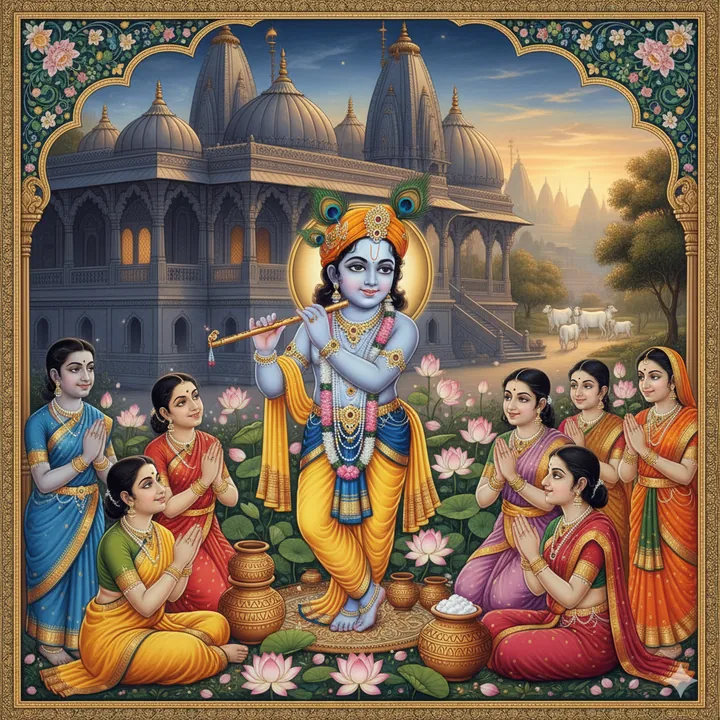
Janmashtami, the birth anniversary of Lord Krishna, is one of the most significant Hindu festivals celebrated with immense devotion and joy across India and the world. This divine celebration marks the appearance of Lord Krishna, the eighth avatar of Lord Vishnu, who descended to Earth to restore dharma and guide humanity toward spiritual enlightenment.
History & Origins
Janmashtami has deep mythological and spiritual significance rooted in ancient Hindu scriptures:
- Divine Birth: Lord Krishna was born at midnight on the eighth day (Ashtami) of the dark fortnight in the month of Bhadrapada (August-September) in the prison of King Kansa in Mathura.
- Prophetic Birth: His birth was foretold to end the tyranny of his maternal uncle Kansa, who had imprisoned his parents, Devaki and Vasudeva, and killed their previous children.
- Divine Intervention: At the time of birth, all the guards fell asleep, the prison doors opened automatically, and Vasudeva was able to carry baby Krishna to safety in Gokul.
- Miraculous Events: The birth was accompanied by divine signs - the sky cleared, stars shone brightly, and celestial beings sang hymns of praise.
Significance
Janmashtami represents profound spiritual and philosophical meanings:
- Divine Love: Krishna's life exemplifies pure, unconditional love and the power of devotion (bhakti) as the path to spiritual liberation.
- Dharma Restoration: His birth marked the beginning of the end of adharma (unrighteousness) and the restoration of cosmic order.
- Universal Teacher: Through the Bhagavad Gita, Krishna taught the world about duty (dharma), devotion (bhakti), and the path to self-realization.
- Divine Play (Leela): Krishna's life was a divine play that demonstrated how to live with joy, love, and spiritual awareness.
How It's Celebrated Worldwide
Janmashtami is celebrated with great enthusiasm across different regions and cultures:
- Mathura & Vrindavan: The birthplace and childhood home of Krishna, where celebrations last for days with grand processions, temple decorations, and cultural programs.
- Maharashtra: Famous for Dahi Handi (curd pot breaking) competitions where teams form human pyramids to reach and break pots filled with curd, symbolizing Krishna's love for butter.
- South India: Celebrated with elaborate decorations, classical music concerts, and traditional dance performances like Bharatanatyam and Kuchipudi.
- International: Major celebrations in the US, UK, Canada, Australia, and other countries with significant Indian populations, featuring cultural programs and community gatherings.
Key Facts
- Date: Celebrated on the eighth day (Ashtami) of the dark fortnight in Bhadrapada month (August-September)
- Time: The main puja is performed at midnight, the exact time of Krishna's birth
- Duration: Celebrations can last from one day to several days, depending on regional traditions
- Fasting: Many devotees observe a day-long fast, breaking it only after midnight puja
Divine Qualities
Krishna's Divine Attributes
- Supreme Personality: Known as the complete incarnation of God with all divine qualities
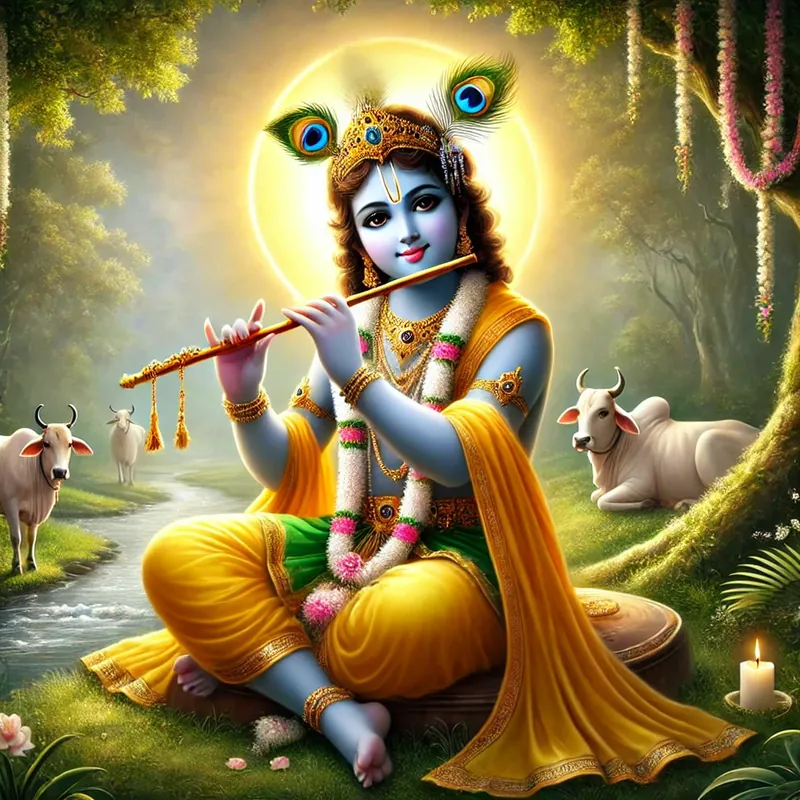
- Divine Flute Player: Krishna's flute represents the divine call that awakens the soul. The melodious sound symbolizes the eternal connection between the individual soul and the Supreme Being.
- Protector of Dharma: Always stood for righteousness and protected the innocent
- Universal Teacher: Through the Bhagavad Gita, he taught the world about duty, devotion, and liberation
- Lover of Devotees: Known for his unconditional love and special relationship with his devotees
Modern Celebrations
Contemporary Janmashtami celebrations blend tradition with modern elements:
- Digital Celebrations:: Online puja ceremonies, virtual temple visits, and live streaming of celebrations during the pandemic
- Cultural Programs: Classical music concerts, dance performances, and drama enactments of Krishna's life
- Community Events: Large-scale celebrations in temples and community centers with food distribution and cultural activities
- Educational Programs: Workshops and seminars about Krishna's teachings and the Bhagavad Gita
Did You Know? (Fun Facts)
- Krishna is known by 108 different names, each representing a different aspect of his divine nature
- The Bhagavad Gita, spoken by Krishna to Arjuna, is considered one of the most important philosophical texts in the world
- Krishna's favorite color is blue, representing the infinite sky and his all-pervading nature
- Peacock Feather
- Krishna's flute is said to have the power to enchant not just humans but all living beings, including animals and birds
The Sacred Flute
Krishna's flute represents the divine call that awakens the soul. Its music symbolizes the eternal connection between the individual soul and the Supreme Being.
Lotus of Devotion
The lotus flower represents purity and spiritual awakening. Just as the lotus blooms in muddy water, the soul can rise above material attachments through devotion.
Peacock's Grace
The peacock, with its beautiful feathers, represents the colorful and joyful nature of divine love. It dances to the rhythm of Krishna's flute.
Detailed Janmashtami Puja Guide
Preparations (1-2 days before)
- Cleaning & Decoration: Thorough cleaning of home and temple area
- Rangoli: Beautiful floor patterns with rice flour and colors
- Flower Garlands: Fresh flowers for decoration and offerings
- Oil Lamps: Traditional diyas and candles for lighting
Essential Puja Samagri
🪘 Deity Items
- Baby Krishna idol or picture
- New clothes (yellow/saffron preferred)
- Crown, necklace, and ornaments
- Small cradle or swing
🍯 Offerings:
- Butter (Krishna's favorite)
- Milk and curd
- Fresh fruits (bananas, apples)
- Traditional sweets (ladoo, peda)
🕯️ Puja Essentials
- Incense sticks and camphor
- Oil lamps (diyas)
- Flowers and garlands
- Holy water (Ganga jal)
Step-by-Step Puja Process
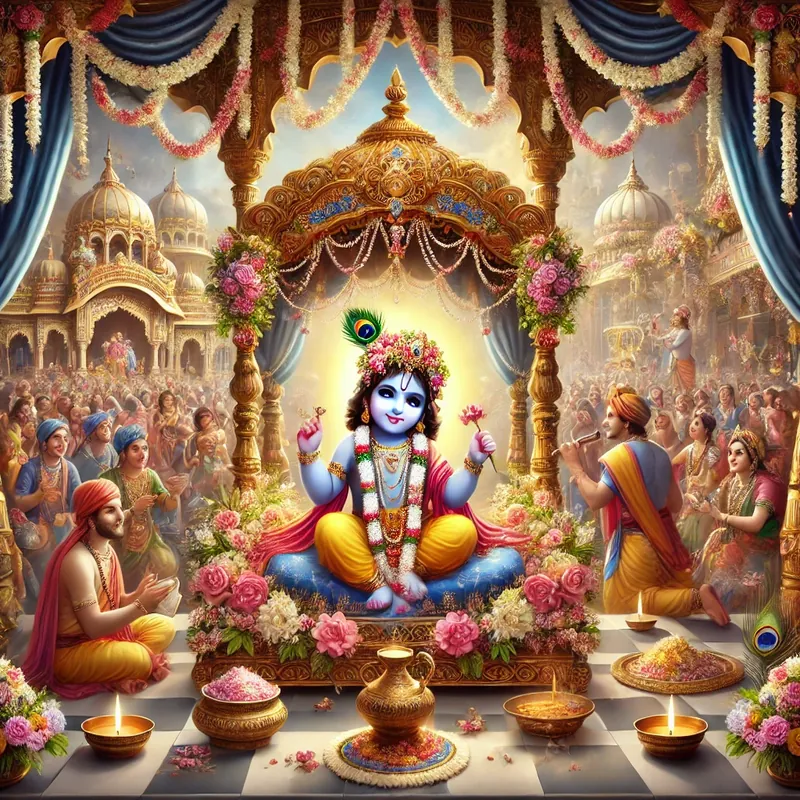
- Bathing the Idol: Clean the Krishna idol with water, milk, and honey
- Dressing:: Dress the idol in new clothes and jewelry
- Placement: Place Krishna in the cradle or on a decorated altar
- Offerings:: Offer butter, milk, fruits, and sweets
- Mantras: Chant Krishna mantras and prayers
- Aarti:: Perform aarti with incense and camphor
- Bhajans:: Sing devotional songs and bhajans
- Midnight Celebration: Special prayers at midnight (Krishna's birth time)
Regional Celebrations
🏛️ Mathura & Vrindavan
Krishna's birthplace and childhood home, where celebrations last for days with grand processions, temple decorations, and elaborate cultural programs.
🏗️ Maharashtra
Dahi Handi competitions are most popular here, where human pyramids try to break pots filled with curd, butter, and money, hung high from the ground.
🏛️ South India
Celebrated as Gokulashtami with special emphasis on Krishna's childhood stories, traditional music, and elaborate temple celebrations.
Krishna's Divine Life Stories
🪘 Krishna's Childhood in Vrindavan
Krishna's childhood was filled with divine leelas - stealing butter, playing with friends, and enchanting everyone with his flute. These stories teach us about pure love, innocence, and the joy of divine relationships.
🐄 Cowherd Life
As a young boy, Krishna spent his days caring for cows and playing with his friends. His love for cows symbolizes his care for all living beings and his role as protector of dharma.
💕 Divine Love with Gopis
The Raas Leela (divine dance) with the gopis (cowherd girls) represents the highest form of spiritual love. It symbolizes the soul's intense longing for union with the divine and the bliss of spiritual realization.
⚔️ Kurukshetra War
As Arjuna's charioteer, Krishna delivered the Bhagavad Gita, the most important spiritual text. He taught about duty, dharma, and the path to liberation, maintaining the role of both friend and guru.
Bhagavad Gita - Krishna's Divine Teachings
The Bhagavad Gita, spoken by Krishna to Arjuna on the battlefield of Kurukshetra, contains the essence of Hindu philosophy and spirituality:
🎯 Key Teachings
- Dharma (Duty): Perform your duty without attachment to results
- Karma Yoga: Path of selfless action and service
- Bhakti Yoga: Path of devotion and love for the divine
- Jnana Yoga: Path of knowledge and wisdom
- Dhyana Yoga: Path of meditation and concentration
💡 Universal Messages
- Equanimity in success and failure
- Detachment from material possessions
- Selfless service to humanity
- Surrender to divine will
- Inner peace through spiritual practice
Krishna's Divine Attributes
🎵 The Flute Player
Krishna's flute represents the divine call that awakens the soul. The sweet sound symbolizes the eternal connection between the individual soul and the supreme being.
🦚 Peacock Feather
The peacock feather in Krishna's crown represents his connection with nature and his role as protector of all living beings. It also symbolizes beauty, grace, and divine joy.
🪷 Lotus Feet
Krishna's lotus feet represent purity, beauty, and the path to liberation. Devotees seek refuge at his feet, which provide spiritual protection and guidance.
💙 Blue Complexion
Krishna's blue color represents the infinite sky and his all-pervading nature. It symbolizes depth, peace, and the vastness of divine consciousness.
Spiritual Significance
📖 Bhagavad Gita Core
Krishna's dialogue with Arjuna on the battlefield of Kurukshetra is the foundation of Hindu philosophy, teaching about duty (dharma), devotion, and the path to liberation (moksha).
💕 Divine Love
Krishna's relationship with the gopis (cowherd girls) represents the highest form of spiritual love, symbolizing the soul's intense longing for union with the divine and the bliss of spiritual realization.
🪘 Flute Symbolism
Krishna's flute represents the divine call that awakens the soul. The flute's sound is said to be so enchanting that it attracts all living beings toward the divine.
More festivals
Coming up next
- Sakat Chauthसकट चौथMagha · Krishna Chaturthi — Mothers fast for their children and worship Lord Ganesha at moonrise.
- Makar Sankranti · Pongalमकर संक्रांति · पोंगलThe Sun enters Capricorn — kites, til-gud and the harvest festival of Pongal.
- Mauni Amavasyaमौनी अमावस्याMagha · Krishna Amavasya — A day of silence and holy dips — especially sacred at Prayagraj.
- Vasant Panchami · Saraswati Pujaवसंत पंचमी · सरस्वती पूजाMagha · Shukla Panchami — Welcoming spring and worshipping Maa Saraswati, goddess of learning.
- Ratha Saptamiरथ सप्तमीMagha · Shukla Saptami — Birthday of Surya Dev — worship of the Sun at dawn.
- Bhishma Ashtamiभीष्म अष्टमीMagha · Shukla Ashtami — Remembering Bhishma Pitamah, who left his body on this day.
- Maha Shivaratriमहाशिवरात्रिPhalguna · Krishna Chaturdashi — The great night of Lord Shiva — fasting, abhishek and all-night jagran.
- Holika Dahanहोलिका दहनPhalguna · Shukla Purnima — The bonfire of good over evil, remembering Prahlad and Holika.
- HoliहोलीChaitra · Krishna Pratipada — The festival of colours, love and the victory of devotion.
- Sheetala Ashtami · Basodaशीतला अष्टमी · बसौड़ाChaitra · Krishna Ashtami — Worship of Maa Sheetala with food cooked the day before.
- Hindu New Year · Gudi Padwa · Ugadiनव संवत्सर · गुड़ी पड़वा · उगादीChaitra · Shukla Pratipada — The Hindu lunar new year begins with Chaitra Shukla Pratipada.
- Chaitra Navratri beginsचैत्र नवरात्रि प्रारंभChaitra · Shukla Pratipada — Nine nights of worship of Maa Durga in spring, ending on Ram Navami.