
Holi
होली
Celebrating the victory of good over evil and the arrival of spring with vibrant colors and joy. A festival that brings people together in unity and celebration.
Tap anywhere to throw gulal
Introduction
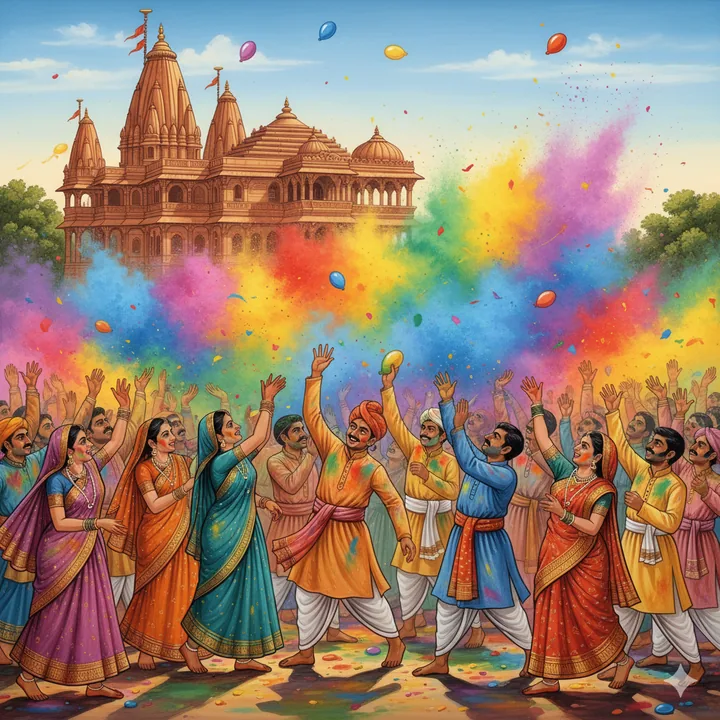
Holi, also known as the Festival of Colors, is one of the most vibrant and joyous festivals celebrated across India and by Hindus worldwide. This ancient festival marks the arrival of spring and celebrates the victory of good over evil.
History & Origins
Holi has deep mythological roots and is celebrated with different traditions across regions:
- Prahlada and Holika: The most popular legend tells of Prince Prahlada's devotion to Lord Vishnu and how he was saved from his evil aunt Holika's fire, symbolizing the victory of good over evil.
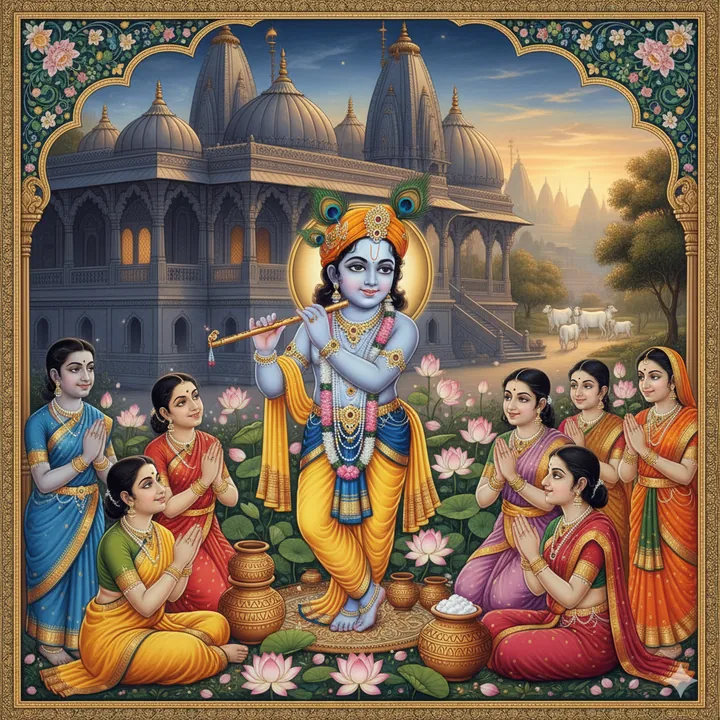
- Radha and Krishna: In the Braj region, Holi celebrates the divine love between Radha and Krishna, with Krishna playing colors with Radha and the gopis.
- Kama and Rati: In South India, Holi celebrates the burning of Kamadeva (god of love) by Shiva and his subsequent resurrection.
- Seasonal Significance: Historically linked to the spring harvest and the end of winter, celebrating fertility and new beginnings.
Significance
Holi is more than just a color festival — it's a celebration of unity, forgiveness, and renewal:
- Unity in Diversity: Colors break down social barriers, bringing people together regardless of caste, creed, or status.
- Forgiveness: The festival encourages letting go of past grievances and starting fresh relationships.
- Joy and Celebration: It's a time for pure joy, dance, music, and celebration of life.
- Cultural Expression: Showcases the vibrant culture of India through music, dance, and traditional foods.
How It's Celebrated Worldwide
Holi is celebrated by millions of people worldwide, from India to Nepal, and in diaspora communities across the globe:
- India: Celebrated with great enthusiasm in Mathura, Vrindavan, Barsana, and other cities with week-long festivities.
- Nepal: Known as "Fagu Purnima" and celebrated with similar traditions.
- International: Major celebrations in the US, UK, Canada, Australia, and other countries with Indian communities.
- Cultural Adoption: Many non-Hindu communities also participate in Holi celebrations, making it a truly inclusive festival.
Key Facts
- Duration: Usually 2 days (Holika Dahan and Rangwali Holi).
- Time: March (Phalguna month, full moon day).
- Traditions: Bonfire on Holika Dahan, playing with colors, traditional sweets, and folk dances.
- Food: Special treats like gujiya, thandai, and various regional delicacies.
Modern Celebrations
Today's Holi celebrations blend traditional customs with modern elements:
- Eco-Friendly Colors: Growing awareness about using natural, plant-based colors.
- Water Conservation: Dry Holi celebrations to conserve water resources.
- Digital Celebrations: Virtual Holi events and social media sharing of colorful moments.
- Global Events: Major cities worldwide host Holi festivals with music, dance, and cultural performances.
Did You Know? (Fun Facts)
- The colors used in Holi traditionally came from natural sources like flowers, herbs, and minerals.
- Mathura and Vrindavan host the most elaborate Holi celebrations lasting over a week.
- Lathmar Holi in Barsana involves women playfully hitting men with sticks.
- In some regions, Holi is celebrated for up to 40 days leading to the main festival day.
- The festival has inspired "Color Runs" and similar events worldwide.
Detailed Holi Celebration Guide
Preparations (1-2 days before)
- Color Preparation: Make or buy natural, eco-friendly colors
- Wood Collection: Gather wood and combustible materials for Holika Dahan
- Traditional Sweets: Prepare gujiya, thandai, and other Holi delicacies
- Old Clothes: Set aside old clothes that can be colored
- Home Decoration: Decorate with flowers and rangoli
Essential Holi Items
🎨 Colors & Materials
- Natural colors (gulal, abir)
- Water guns (pichkaris)
- Color powder (dry colors)
- Water balloons
- Protective eyewear
🔥 Holika Dahan Items
- Wood and combustible materials
- Ghee and oil for the fire
- Grains (wheat, barley) for offering
- Camphor and incense
- Red thread (moli) for protection
🍯 Traditional Foods
- Gujiya (sweet dumplings)
- Thandai (spiced milk drink)
- Bhang (if legally permitted)
- Traditional sweets (ladoo, peda)
- Fresh fruits and dry fruits
Holi Celebration Process
- Holika Dahan (Night Before): Light bonfire, offer prayers, and circumambulate the fire
- Early Morning Bath: Take a purifying bath before starting celebrations
- Puja & Prayers: Offer prayers to Lord Krishna and Radha
- Color Application: Apply tilak and colors to family members
- Community Celebration: Join neighbors and friends for color play
- Traditional Songs: Sing Holi songs and bhajans
- Feast & Sweets: Enjoy traditional Holi foods and drinks
- Evening Cleanup: Clean up and rest after the celebrations
Regional Celebrations
🏛️ Mathura & Vrindavan
Week-long celebrations with Lathmar Holi, where women playfully beat men with sticks. Famous for the Banke Bihari temple celebrations.
🎭 Barsana
Lathmar Holi is most famous here, where women chase men with sticks, reenacting the playful relationship between Radha and Krishna.
🌺 West Bengal
Celebrated as "Dol Jatra" with processions of Lord Krishna and Radha, accompanied by traditional songs and dances.
🏔️ Uttarakhand
Known as "Kumaoni Holi" with unique traditions like "Baithaki Holi" (sitting Holi) with folk songs and classical music.
Holi Week Celebrations (Mathura/Vrindavan)
Day 1 - Lathmar Holi
Location: Barsana | Activity: Women beat men with sticks
The most famous Holi celebration where women playfully chase men with sticks, symbolizing Radha's playfulness.
Day 2 - Phoolon ki Holi
Location: Vrindavan | Activity: Flower Holi
Celebrated with flower petals instead of colors, creating a beautiful and fragrant atmosphere.
Day 3 - Widow's Holi
Location: Vrindavan | Activity: Special celebration
A unique celebration where widows participate in Holi, breaking social taboos and celebrating life.
Day 4-6 - Temple Celebrations
Location: Various temples | Activity: Religious ceremonies
Special pujas and ceremonies in different temples with traditional music and dance performances.
Day 7 - Rangwali Holi
Location: Mathura | Activity: Main color celebration
The main day of color celebration with traditional colors, music, and dance throughout the city.
Spiritual Significance
🔥 Victory of Good
Holi celebrates the victory of good over evil, as exemplified by Prahlada's devotion defeating Holika's evil intentions. The bonfire symbolizes the burning of negativity.
💕 Divine Love
The festival celebrates the divine love between Radha and Krishna, symbolizing the soul's longing for union with the divine through pure love and devotion.
🔄 Renewal & Forgiveness
Holi is a time for spiritual renewal, forgiveness, and starting fresh. The colors represent the diversity of life and the unity that underlies all existence.
More festivals
Coming up next
- Sakat Chauthसकट चौथMagha · Krishna Chaturthi — Mothers fast for their children and worship Lord Ganesha at moonrise.
- Makar Sankranti · Pongalमकर संक्रांति · पोंगलThe Sun enters Capricorn — kites, til-gud and the harvest festival of Pongal.
- Mauni Amavasyaमौनी अमावस्याMagha · Krishna Amavasya — A day of silence and holy dips — especially sacred at Prayagraj.
- Vasant Panchami · Saraswati Pujaवसंत पंचमी · सरस्वती पूजाMagha · Shukla Panchami — Welcoming spring and worshipping Maa Saraswati, goddess of learning.
- Ratha Saptamiरथ सप्तमीMagha · Shukla Saptami — Birthday of Surya Dev — worship of the Sun at dawn.
- Bhishma Ashtamiभीष्म अष्टमीMagha · Shukla Ashtami — Remembering Bhishma Pitamah, who left his body on this day.
- Maha Shivaratriमहाशिवरात्रिPhalguna · Krishna Chaturdashi — The great night of Lord Shiva — fasting, abhishek and all-night jagran.
- Holika Dahanहोलिका दहनPhalguna · Shukla Purnima — The bonfire of good over evil, remembering Prahlad and Holika.
- HoliहोलीChaitra · Krishna Pratipada — The festival of colours, love and the victory of devotion.
- Sheetala Ashtami · Basodaशीतला अष्टमी · बसौड़ाChaitra · Krishna Ashtami — Worship of Maa Sheetala with food cooked the day before.
- Hindu New Year · Gudi Padwa · Ugadiनव संवत्सर · गुड़ी पड़वा · उगादीChaitra · Shukla Pratipada — The Hindu lunar new year begins with Chaitra Shukla Pratipada.
- Chaitra Navratri beginsचैत्र नवरात्रि प्रारंभChaitra · Shukla Pratipada — Nine nights of worship of Maa Durga in spring, ending on Ram Navami.