
Navratri
नवरात्रि
Honoring the divine feminine energy through nine forms of Goddess Durga, celebrating victory over evil and the power of devotion. Watch as traditional dandiya sticks dance in the air alongside glowing parachutes, creating a magical Navratri atmosphere.
Introduction
Navratri, meaning 'nine nights', is one of the most significant Hindu festivals dedicated to the worship of Goddess Durga and her various forms. This festival celebrates the divine feminine energy and the victory of good over evil.
History & Origins
Navratri has deep mythological and spiritual significance:
- Goddess Durga's Victory: Celebrates the victory of Goddess Durga over the buffalo demon Mahishasura after a fierce battle lasting nine days and nights.
- Nine Forms of Durga: Each night honors a different form of the goddess: Shailaputri, Brahmacharini, Chandraghanta, Kushmanda, Skandamata, Katyayani, Kalaratri, Mahagauri, and Siddhidatri.
- Ramayana Connection: Lord Rama worshiped Goddess Durga for nine days before his battle with Ravana, seeking her blessings for victory.
- Seasonal Significance: Celebrated twice a year - Chaitra Navratri (spring) and Sharad Navratri (autumn), marking important seasonal transitions.
Significance
Navratri represents profound spiritual and cultural meanings:
- Divine Feminine Power: Celebrates Shakti (divine feminine energy) and its various manifestations in the universe.
- Victory of Good over Evil: Symbolizes the triumph of righteousness over wickedness and ignorance.
- Spiritual Renewal: A time for spiritual cleansing, fasting, and deepening one's connection with the divine.
- Cultural Unity: Brings communities together through shared devotion, music, dance, and celebration.
How It's Celebrated Worldwide
Navratri is celebrated with regional variations across India and in Hindu communities worldwide:
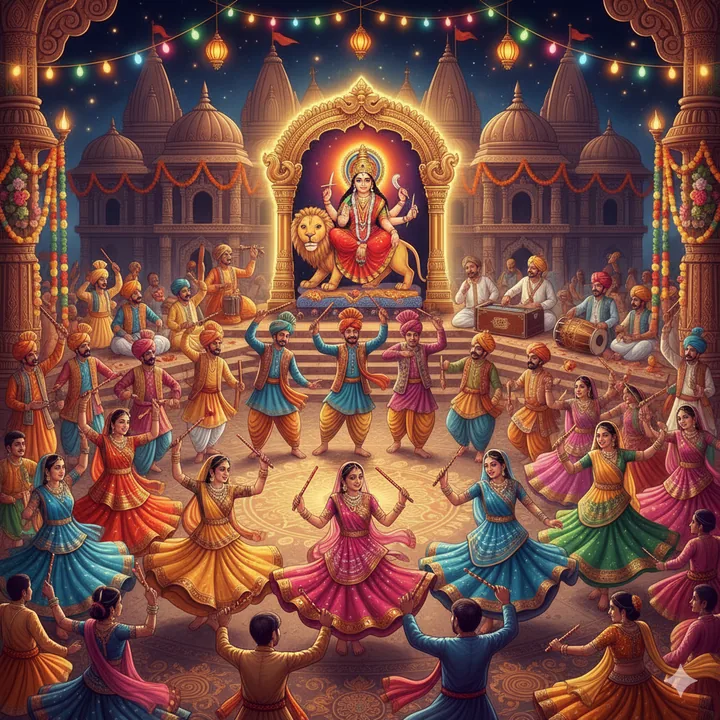
- Gujarat: Famous for Garba and Dandiya Raas dances, with people dancing in circles around an image or idol of the goddess.
- West Bengal: Celebrated as Durga Puja with elaborate pandals, artistic idols, and grand processions.
- South India: Features Golu (display of dolls), classical music concerts, and traditional decorations.
- International: Major celebrations in the US, UK, Canada, Australia, and other countries with significant Indian populations.
Key Facts
- Duration: Nine nights and ten days, with the tenth day celebrated as Vijayadashami or Dussehra.
- Frequency: Celebrated twice a year - Chaitra Navratri (March-April) and Sharad Navratri (September-October).
- Traditions: Fasting, prayer, Garba/Dandiya dance, Golu displays, and community celebrations.
- Colors: Each day is associated with a specific color representing different aspects of the goddess.
Nine Forms of Durga
Each day of Navratri is dedicated to a specific form of Goddess Durga:
- Day 1 - Shailaputri: Daughter of the mountains, riding a bull.
- Day 2 - Brahmacharini: The meditating form, holding a rosary and water pot.
- Day 3 - Chandraghanta: With a bell-shaped moon on her forehead, riding a tiger.
- Day 4 - Kushmanda: Creator of the universe, residing in the sun.
- Day 5 - Skandamata: Mother of Skanda (Kartikeya), riding a lion.
- Day 6 - Katyayani: Warrior goddess, born to sage Katyayana.
- Day 7 - Kalaratri: The fierce form, destroyer of darkness and ignorance.
- Day 8 - Mahagauri: The fair-complexioned goddess, symbolizing purity.
- Day 9 - Siddhidatri: Bestower of supernatural powers and spiritual accomplishments.
Modern Celebrations
Contemporary Navratri celebrations blend tradition with modern elements:
- Digital Celebrations: Online Garba sessions and virtual puja ceremonies during the pandemic.
- Fusion Music: Traditional devotional songs mixed with contemporary beats and international music.
- Cultural Exchange: Non-Hindu communities participating in Garba and cultural events.
- Eco-Friendly Practices: Sustainable decorations, biodegradable materials, and LED lighting.
Did You Know? (Fun Facts)
- The word "Navratri" comes from Sanskrit: "nava" (nine) and "ratri" (nights).
- Garba dance is performed in a circle around a lamp or image of the goddess, symbolizing the cycle of life.
- In Gujarat, Navratri is the biggest festival, with the entire state coming alive with celebrations.
- Each day of Navratri has a specific color associated with it, and devotees often wear clothes of that color.
- The festival marks the beginning of the festive season in India, leading up to Diwali.
Detailed Navratri Puja Guide
Preparations (1-2 days before)
- Cleaning & Purification: Thorough cleaning of home and puja area
- Kalash Sthapana: Setting up the sacred pot with holy water and mango leaves
- Ghatasthapana: Installing barley seeds in a pot for germination
- Rangoli & Decorations: Beautiful floor patterns and flower decorations
Essential Puja Samagri
🕯️ Puja Essentials
- Durga Mata idol or picture
- Kalash (sacred pot) with coconut
- Mango leaves and holy water
- Incense sticks and camphor
- Oil lamps (diyas) and candles
🌺 Offerings
- Fresh flowers and garlands
- Fruits (bananas, apples, coconuts)
- Traditional sweets (ladoo, peda)
- Red cloth and sindoor
- Kumkum and turmeric
🎭 Ritual Items
- Dandiya sticks (for dance)
- Garba costumes and jewelry
- Bell for aarti
- Red thread (moli) for protection
- Sacred books (Durga Saptashati)
Daily Puja Process
- Morning Bath: Take a purifying bath before starting puja
- Kalash Puja: Worship the sacred pot with water and mango leaves
- Ghatasthapana: Plant barley seeds in a pot (first day only)
- Durga Puja: Offer prayers to the specific form of Durga for that day
- Mantra Chanting: Recite Durga mantras and stotras
- Aarti: Perform aarti with incense and camphor
- Evening Garba: Participate in Garba and Dandiya dances
- Fasting: Maintain the fast as per your capacity
Detailed Nine Days Celebration
Day 1 - Shailaputri
Color: Red | Offering: Ghee
Daughter of the mountains, riding a bull. Represents the power of nature and mountains.
Day 2 - Brahmacharini
Color: Blue | Offering: Sugar
The meditating form, holding a rosary and water pot. Symbolizes penance and devotion.
Day 3 - Chandraghanta
Color: Yellow | Offering: Milk
With a bell-shaped moon on her forehead, riding a tiger. Represents courage and bravery.
Day 4 - Kushmanda
Color: Green | Offering: Malpua
Creator of the universe, residing in the sun. Symbolizes the creative power of the universe.
Day 5 - Skandamata
Color: Grey | Offering: Banana
Mother of Skanda (Kartikeya), riding a lion. Represents motherly love and protection.
Day 6 - Katyayani
Color: Orange | Offering: Honey
Warrior goddess, born to sage Katyayana. Symbolizes courage and determination.
Day 7 - Kalaratri
Color: White | Offering: Jaggery
The fierce form, destroyer of darkness and ignorance. Represents the power to overcome obstacles.
Day 8 - Mahagauri
Color: Pink | Offering: Coconut
The fair-complexioned goddess, symbolizing purity and peace.
Day 9 - Siddhidatri
Color: Purple | Offering: Sesame seeds
Bestower of supernatural powers and spiritual accomplishments.
Regional Celebrations
🕺 Gujarat
Famous for Garba and Dandiya Raas dances. People dance in circles around an image of the goddess, wearing colorful traditional attire.
🏛️ West Bengal
Celebrated as Durga Puja with elaborate pandals, artistic idols, grand processions, and cultural programs.
🎭 South India
Features Golu (display of dolls), classical music concerts, traditional decorations, and community gatherings.
🌍 International
Major celebrations in the US, UK, Canada, Australia, and other countries with significant Indian populations.
Spiritual Significance
💪 Shakti Worship
Navratri celebrates the divine feminine energy (Shakti) and its various manifestations. It's a time to honor the power of creation, preservation, and destruction.
⚔️ Victory of Good
The festival symbolizes the triumph of righteousness over wickedness, as exemplified by Durga's victory over the demon Mahishasura.
🔄 Spiritual Renewal
Navratri is a time for spiritual cleansing, fasting, prayer, and deepening one's connection with the divine through devotion and meditation.
More festivals
Coming up next
- Sakat Chauthसकट चौथMagha · Krishna Chaturthi — Mothers fast for their children and worship Lord Ganesha at moonrise.
- Makar Sankranti · Pongalमकर संक्रांति · पोंगलThe Sun enters Capricorn — kites, til-gud and the harvest festival of Pongal.
- Mauni Amavasyaमौनी अमावस्याMagha · Krishna Amavasya — A day of silence and holy dips — especially sacred at Prayagraj.
- Vasant Panchami · Saraswati Pujaवसंत पंचमी · सरस्वती पूजाMagha · Shukla Panchami — Welcoming spring and worshipping Maa Saraswati, goddess of learning.
- Ratha Saptamiरथ सप्तमीMagha · Shukla Saptami — Birthday of Surya Dev — worship of the Sun at dawn.
- Bhishma Ashtamiभीष्म अष्टमीMagha · Shukla Ashtami — Remembering Bhishma Pitamah, who left his body on this day.
- Maha Shivaratriमहाशिवरात्रिPhalguna · Krishna Chaturdashi — The great night of Lord Shiva — fasting, abhishek and all-night jagran.
- Holika Dahanहोलिका दहनPhalguna · Shukla Purnima — The bonfire of good over evil, remembering Prahlad and Holika.
- HoliहोलीChaitra · Krishna Pratipada — The festival of colours, love and the victory of devotion.
- Sheetala Ashtami · Basodaशीतला अष्टमी · बसौड़ाChaitra · Krishna Ashtami — Worship of Maa Sheetala with food cooked the day before.
- Hindu New Year · Gudi Padwa · Ugadiनव संवत्सर · गुड़ी पड़वा · उगादीChaitra · Shukla Pratipada — The Hindu lunar new year begins with Chaitra Shukla Pratipada.
- Chaitra Navratri beginsचैत्र नवरात्रि प्रारंभChaitra · Shukla Pratipada — Nine nights of worship of Maa Durga in spring, ending on Ram Navami.